
N.A.M.E. National Office
Professional Association for Mobile Entertainers
Email: office@nameentertainers.net
Mail: P.O. Box 144, Willow Grove, PA 19090
for Mobile Entertainers Get Insurance Info
Insurance for Mobile Entertainers
N.A.M.E. partners with Brown & Brown Insurance to offer comprehensive liability and equipment coverage designed specifically for DJs, bands, photographers, and other mobile entertainers. Coverage up to $5,000,000 is available.
Learn about insurance →News & Updates
Stay informed with the latest announcements from the National Association of Mobile Entertainers, including trade show coverage, webinar updates, and member spotlights.
N.A.M.E. publishes a monthly e-newsletter via Constant Contact featuring discounts, member benefits, and upcoming industry expos.
Sign up for the newsletter →Find an Entertainer
Search the N.A.M.E. directory of DJs and mobile entertainers who have invested in their business and uphold the quality standards of the association. Members include DJs, hypnotists, photographers, bands, event planners, booking agents, theatrical groups, and comedians.
Browse the directory →How to communicate with your insurer about overnight setup events
Mobile entertainers across Australia regularly take on bookings that demand equipment to be left in place between setup and the actual performance. A wedding at a vineyard in the Barossa Valley, a school formal in suburban Perth, or a brand activation in Sydney's Darling Harbour can all require gear to be secured on site hours before anyone arrives. These arrangements create a window of exposure that differs from a standard same-day event, and your insurance policy needs to reflect the realities of how the job actually unfolds. Speaking with your insurer in the right way, with the right language, makes the difference between a clean claim and a drawn-out dispute.
Australian venues often lock down overnight, regional roads add travel complexity, and many clients expect signage, lighting rigs, or DJ booths to be ready well before guests walk in. Each of those details carries insurance implications that a generic phone call rarely captures. The goal is to translate the practical workflow of your business into the formal vocabulary your underwriter expects to hear.
Recognising when an overnight setup changes your risk profile
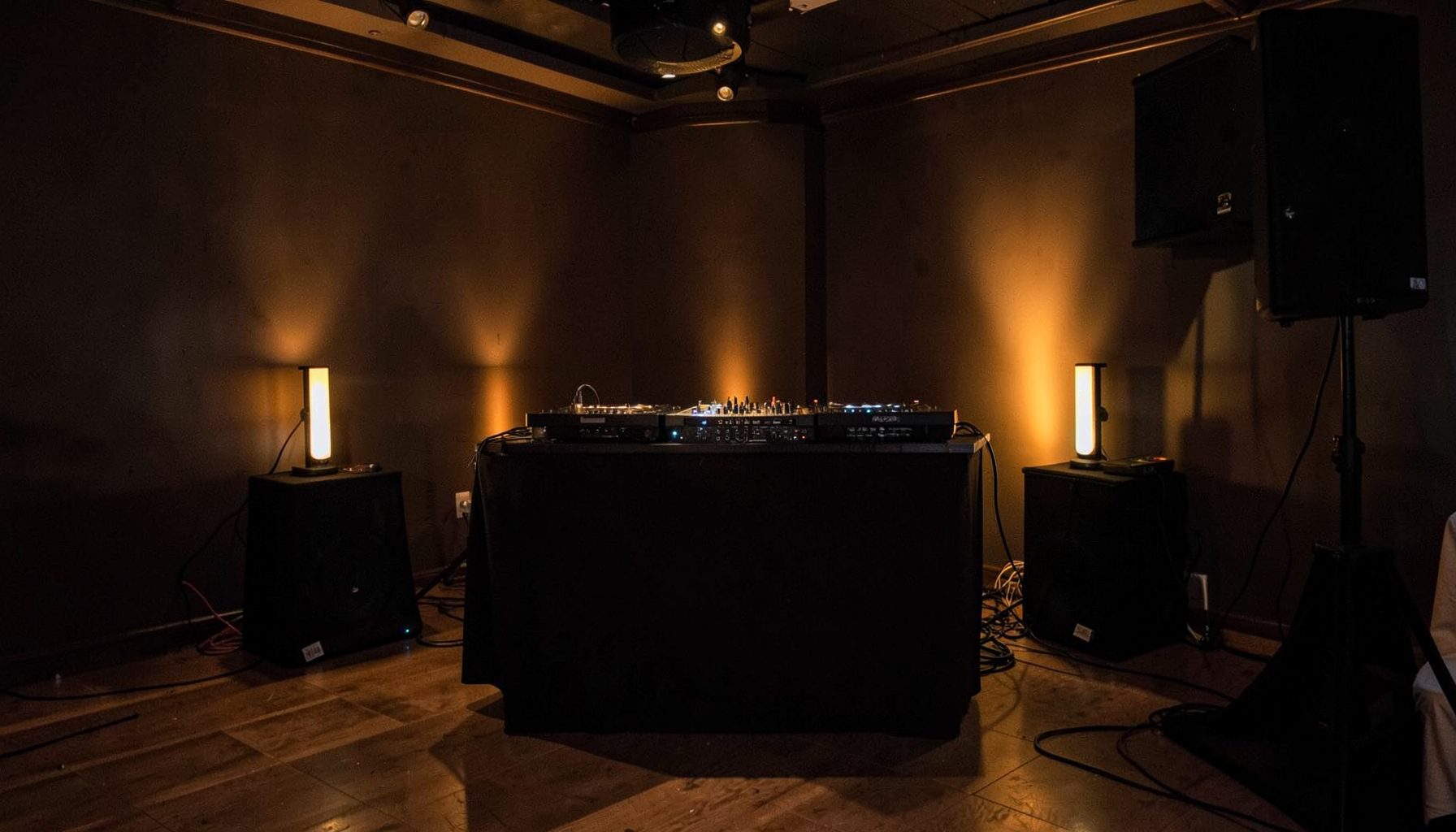
Not every late-night booking qualifies as an overnight setup in the eyes of an insurer. The distinction usually rests on whether the equipment remains on site, unattended, after your crew has left for the day. A regional rodeo in Tamworth where the PA stays in place from Friday afternoon until Saturday morning is a textbook example. So is a corporate awards night at a Melbourne ballroom where lighting trusses must be rigged the afternoon before doors open. Even a backyard wedding in the Adelaide Hills, where the couple wants the marquee, dance floor, and sound system pre-installed the night before, can trigger policy conditions you may not have realised existed.
The first step is to read your current policy schedule and look for clauses that mention unattended equipment, overnight exposure, or extended hire periods. Australian policies often distinguish between "in use" and "in storage or transit," and a setup left on a venue floor overnight may technically fall outside the in-use definition. When that gap appears, a conversation with your insurer is overdue rather than optional.
Preparing the right information before you pick up the phone
Insurers respond well to specifics, and vague summaries of an upcoming booking rarely produce useful detail in return. Before contacting your provider, gather the venue address, the date and time the gear will be installed, the duration it will remain in place, and the value of the equipment being left on site. Include the type of venue, whether it is a private residence, a licensed function centre, or a public space such as an RSL club in Brisbane. Each carries different security assumptions.
Photographs of the storage area, notes about access control, and confirmation of whether the venue provides overnight security or CCTV coverage all help your insurer assess the risk accurately. The same goes for transport details. A drive from Geelong to a wedding in the Yarra Valley after a setup is a separate consideration from local overnight placement in Parramatta. Pulling this information together before the call shows professionalism and reduces the chance the underwriter will decline to amend or clarify coverage based on incomplete details.
Speaking the same language as your underwriter
Once you have the facts ready, the way you describe the event shapes the response you receive. Avoid casual phrasing such as "we'll just leave it there for the night." Instead, use the formal language of insurance: "equipment will remain on the premises unattended for approximately fourteen hours," or "gear will be stored in a secured venue room overnight with no member of the entertainer's staff present." Underwriters are trained to look for precise risk descriptions, and precise language signals that you understand what you are asking them to cover.
It also helps to ask direct, plain questions. What does the current policy cover when equipment is unattended? Are there geographic exclusions that apply to remote locations, particularly in the Northern Territory or outback Western Australia? Does the policy treat overnight setup as a separate peril or as an extension of public liability? If your insurer offers equipment cover with an unattended clause, ask what security measures are required for that clause to remain valid. A locked venue alone may not satisfy the condition; some policies also expect alarms, documented chain-of-custody, or named venue contacts.
Accounting for the practical realities of Australian events
Australia's geography shapes how overnight setups actually work, and your insurer needs to hear about those realities. A music festival in regional New South Wales might be hundreds of kilometres from the nearest replacement equipment supplier, which means a single theft or damage event has bigger consequences than a similar loss in the inner suburbs of Adelaide. Long drives between cities also affect how and when gear arrives on site, which can blur the line between transit and storage in the eyes of a policy.
Local conditions matter too. Bushfire season affects outdoor events in summer, cyclone season shapes planning for Far North Queensland bookings, and coastal venues face salt-air exposure that inland insurers may not price for. State-based regulations add another layer: licensed venues in Victoria and NSW have specific security and crowd management obligations, while Western Australia's remote mine-site functions often involve additional inductions and access protocols. Naming these conditions during your conversation demonstrates that you have considered the risk carefully and helps the underwriter tailor a response to your actual operations.
Misunderstandings that commonly lead to claim denials
Several recurring errors trip up mobile entertainers who try to handle overnight setup communication on their own. The first is assuming that public liability cover automatically extends to unattended equipment. It rarely does. The second is treating an informal email or text exchange with a venue manager as proof that the equipment was secured. Insurers usually want written confirmation from a named venue contact, ideally with venue letterhead or an email signature that can be verified.
A third error is failing to disclose a previous claim or a known issue with the equipment being left on site. Non-disclosure remains a leading cause of declined claims in Australia, particularly under the Insurance Contracts Act 1984. Equally common is underestimating the value of gear left overnight. Inflated or undervalued equipment schedules both create problems at claim time; a current, audited asset register protects you in both directions.
Members of professional associations often have a quieter path through these conversations. Reaching out to peers and to bodies such as the staff advisory board of N.A.M.E. can surface templates, sample emails, and reviewed wording that has worked for colleagues in similar situations.
Different channels suit different situations, and choosing the right one can save weeks of back-and-forth when an overnight setup adds complexity to a standard booking.
| Channel | Best For | Speed | Documentation Quality | Best Practice |
|---|---|---|---|---|
| Routine overnight setups, policy amendments | 1-3 business days | Strong | Keep replies in a dedicated folder with date stamps | |
| Phone Call | Urgent clarifications before an event | Immediate | Limited without follow-up | Follow up with an email summary within 24 hours |
| In-Person Broker Meeting | Complex multi-event schedules | Same day resolution possible | Strong when minuted | Bring your full event calendar and asset register |
| Broker Portal Messaging | Mid-tier updates and confirmations | 4-12 hours | Moderate | Use the portal's audit trail rather than personal email |
| Written Submission to Underwriter | High-value or unusual risk locations | 5-10 business days | Very strong | Request a written response, not a verbal nod |
Documents and evidence worth gathering before contact
A short, focused checklist travels well into any insurer conversation.
- Current asset register with serial numbers, purchase values, and depreciation notes
- Venue hire agreement naming the equipment owner and storage arrangements
- Site map or floor plan showing where equipment will be positioned overnight
- Photo evidence of locks, CCTV, or alarm systems at the venue
- Contact details for the venue's overnight duty manager or security provider
- Confirmation of any state-based permits required for outdoor events in the relevant jurisdiction
Steps to take after the conversation
- Request written confirmation of any coverage extension, including the policy section and effective date
- Store all correspondence in a single claim-ready folder, separated by event
- Update your internal risk assessment for any future events at the same venue
- Schedule a six-month review to ensure the policy still matches the way your business operates
- Share lessons with team members or contractors who may face similar conversations
Overnight setups are no longer unusual in the mobile entertainment calendar, and treating them as routine is the first step toward trouble. A short, well-prepared conversation with your insurer, anchored by documentation and the realities of your events, creates a paper trail that protects you if anything goes wrong. N.A.M.E. members can use the association's resources to refine these conversations, draw on tested templates, and connect with peers who have already navigated similar situations. Reach out to the team today and put a clear overnight-setup protocol in place before the next booking locks in.
Get in Touch
Contact N.A.M.E. for membership inquiries, insurance questions, or general information.