

N.A.M.E. National Office
Professional Association for Mobile Entertainers
Email: office@nameentertainers.net
Mail: P.O. Box 144, Willow Grove, PA 19090
for Mobile Entertainers Get Insurance Info
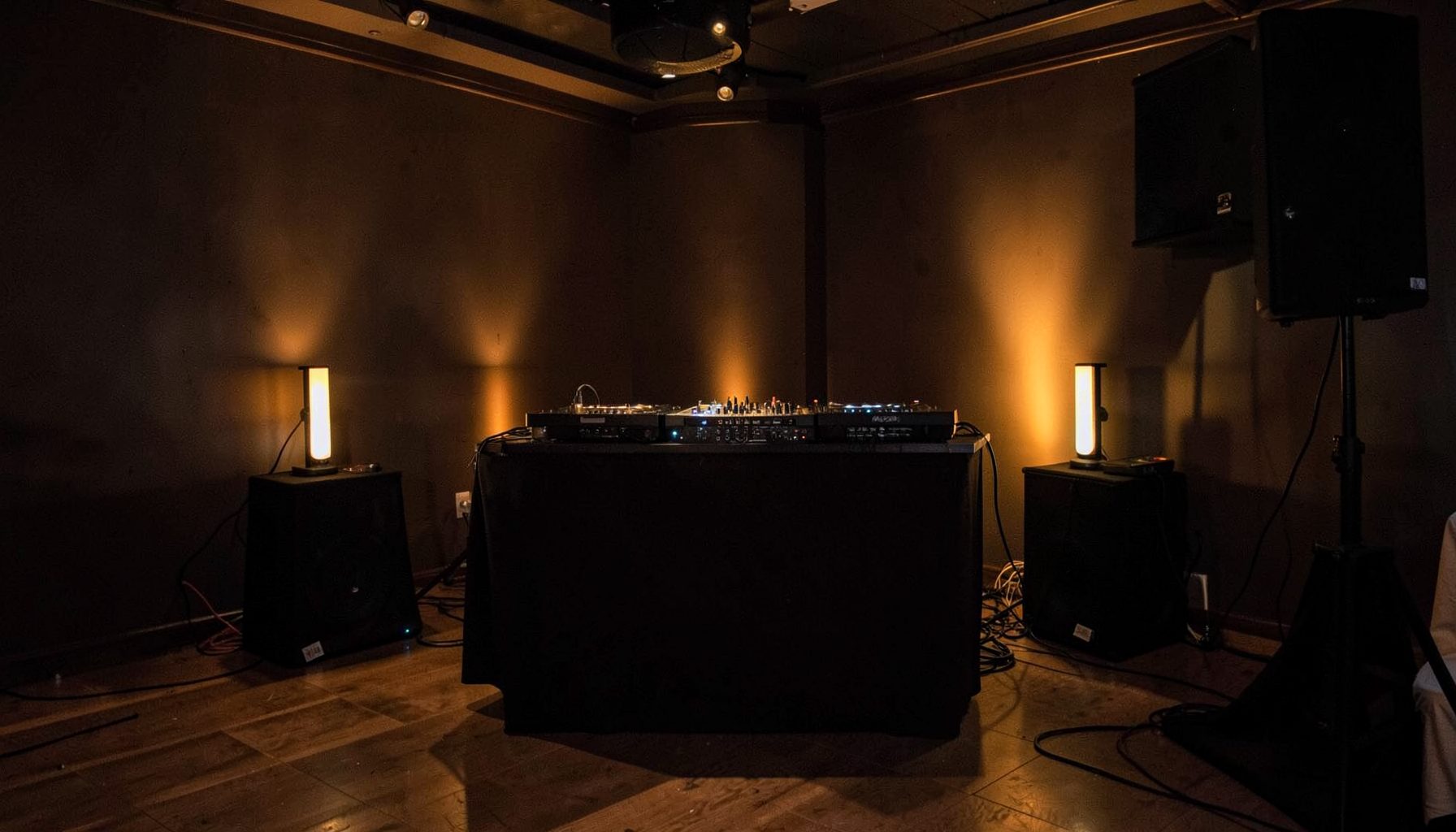
Insurance for Mobile Entertainers
N.A.M.E. partners with Brown & Brown Insurance to offer comprehensive liability and equipment coverage designed specifically for DJs, bands, photographers, and other mobile entertainers. Coverage up to $5,000,000 is available.
Learn about insurance →News & Updates
Stay informed with the latest announcements from the National Association of Mobile Entertainers, including trade show coverage, webinar updates, and member spotlights.
N.A.M.E. publishes a monthly e-newsletter via Constant Contact featuring discounts, member benefits, and upcoming industry expos.
Sign up for the newsletter →Find an Entertainer
Search the N.A.M.E. directory of DJs and mobile entertainers who have invested in their business and uphold the quality standards of the association. Members include DJs, hypnotists, photographers, bands, event planners, booking agents, theatrical groups, and comedians.
Browse the directory →Handling a damaged microphone claim in Australia
A wireless microphone can leave a Melbourne studio in a padded flight case and arrive at a Sydney hotel with a dented grille, cracked connector or intermittent signal. When it is shipped to an event location, document the damage and notify the carrier and insurer before repairs begin. A clear claim file prevents transit loss from being confused with faulty equipment or ordinary wear. Learn more about Contact.
The responsible claim route depends on ownership, packing, carriage terms and where the handover occurred. It also matters whether the microphone was bought outright, hired for the event, supplied under a rental agreement or carried by the entertainer. These steps suit Australian mobile entertainers, DJs and event crews working across Melbourne, Brisbane, Perth, Adelaide and regional towns. Learn more about Thedemeterfoundation.com.
Establish responsibility before the gear moves
Start with the agreement covering the microphone. Check the purchase invoice, rental agreement, event order, courier booking and insurance schedule. Identify the legal owner, the party that arranged carriage, the person who packed the case and who accepted delivery. The owner may claim against the carrier or insurer, while the hiring company or seller may have a separate contractual duty to repair or replace the equipment. Learn more about The Importance Of Workers Compensation Insurance For Entertainment Crews 765c95.
Draw a simple timeline from pickup to arrival. Note every tracking scan, delivery attempt, inspection and movement between the loading dock, van, green room and stage. A carrier’s proof of delivery confirms handover, but it does not necessarily determine who bears responsibility for damage discovered at the event. Keep communications factual and avoid statements such as “the courier did it” until the evidence supports that conclusion. Learn more about Nameentertainers.net.
Australian couriers such as Australia Post and StarTrack, together with local van delivery services, use tracking and electronic proof of delivery as standard records. That makes an interstate movement from Melbourne to a Brisbane convention centre easier to reconstruct than a last-minute trip across town. N.A.M.E. advertises [association member benefits] including liability and equipment insurance options, business consulting and educational resources. Australian operators should confirm eligibility, policy jurisdiction, limits and exclusions before relying on those options for a local shipment.
Preserve evidence at unpacking
Before powering the microphone, photograph the outer carton, shipping label, tape, dents, punctures and any sign of water exposure. Record the date, time, place and names of everyone present. Open the case in a continuous video if practical, showing the label first and then each layer of packaging. Photograph the microphone from several angles, including its serial number, grille, body, connector and battery compartment.
Do not discard the carton, foam inserts, labels, screws or damaged parts until the carrier and insurer approve disposal. A repairer may need to compare the damage with impact marks on the packaging, and a replacement claim may depend on proof that the equipment was sound before dispatch. If a connector is unstable, do not keep reconnecting it, as repeated testing could cause further damage.
Ask the venue representative to record that damage was observed at handover and invite them to sign that observation. Avoid language that assigns or admits legal fault. Keep the microphone switched off in a dry, secure place. Australian event load-ins can involve a hotel ballroom, nightclub service entrance or regional wedding venue, so a signed condition note protects everyone involved in the transfer.
Notify the carrier and insurer quickly
Contact the carrier as soon as the issue is discovered and open an incident claim. Its claim window may be shorter than an insurer’s, and some couriers require online lodgement, a proof-of-delivery record, photographs and an invoice for the lost or damaged item. Ask for the claim number, the next action and whether the item must remain available for inspection. Give the carrier a concise account of when and where the fault appeared.
Notify the equipment insurer separately if a policy was in force, even when the shipment was sent by a third party. Insurers commonly ask for the policy number, purchase evidence, a description of prior condition, the carrier claim and repair or replacement estimates. Tell the insurer about damage found at the event rather than waiting for a technician’s final report, then provide the report as an update. Do not authorize repairs or disposal without checking whether the policy requires approval first.
Keep every email, receipt, quote and call note in one electronic folder. A repairer’s written opinion that the failure is consistent with impact is useful, while an unsupported assertion that shipping caused it may not be. If a courier attempts delivery and the driver observes obvious damage, record the exception on the handheld device and obtain a reference number. If the sender packed the microphone inadequately, expect that fact to affect the carrier claim even if the equipment was valuable.
Apply Australian law and insurance correctly
The Australian Consumer Law and the applicable state or territory fair trading legislation can matter when a consumer bought the microphone, while a business-to-business hire or supply agreement will often be the primary contract. If the seller dispatched a microphone that was already faulty or not as described, the seller may need to repair or replace it. If suitable equipment was packed correctly but damaged in transit, the carrier or insurer is more likely to be responsible. Written notices, invoices and terms should support the chosen path.
Different policies respond to different losses. Transit cover may pay for goods damaged during carriage, while equipment insurance may respond to accidental damage under specified conditions. Public liability usually concerns third-party injury or property damage rather than the insured party’s own microphone. The N.A.M.E. explanation of [workers compensation insurance] provides useful background for entertainment crews, while Australian injury claims follow state and territory schemes and remain separate from the replacement cost of damaged equipment.
Keep replacement costs in Australian dollars and obtain a tax invoice from the repairer or supplier. If the business is GST registered, clearly show the GST amount rather than using a casual cash estimate. That gives the insurer or carrier a documented basis for assessing the claim and helps the business reconcile the payment through its own records. Check whether the policy excludes hired items, unattended vehicles, shipping by an unauthorised carrier, inadequate packing, wear, pre-existing faults and consequential losses such as cancelled performances.
Build evidence that can withstand review
Create a concise chronology and attach the evidence to it. A reviewer should be able to see the condition at dispatch, the condition at arrival and the chain of custody without relying on anyone’s memory.
The claim file should contain:
- The carrier and insurer claim numbers, contact details and recorded deadlines.
- Photographs of the outer packaging, shipping label, foam, microphone and serial number.
- A continuous unpacking video with the date, location and people present shown or stated.
- The purchase invoice, rental agreement and evidence of the microphone’s condition before dispatch.
- A technician’s report plus current repair, replacement and salvage-value quotes.
- The tracking history, proof of delivery, signed handover note and relevant messages.
Before agreeing to any settlement, check the amount, excess, depreciation, GST treatment, repair quality and delivery time for a replacement. A repair settlement may be appropriate if the unit is economically repairable; a replacement settlement may be better if the venue date is fixed and parts will take time. Do not sign a document that releases claims against a carrier, supplier or insurer until you know what it covers and what payment accompanies it.
If no policy or contract appears to cover the loss, approach the sender, hiring company, venue or event organiser under their written terms. A charitable organisation such as the [Demeter Foundation] may also be worth checking for an applicable hardship or equipment-support program, but it should not be presented as legally responsible for the shipment. Keep the original microphone and packaging while that option is explored.
Choose the route and act promptly
The most practical route depends on whether responsibility rests with the carrier, an insurer, the supplier or the party that accepted the equipment at the venue. Compare the available options using the policy wording and the evidence already gathered.
| Claim route | Who normally leads it | Key evidence | Possible outcome |
|---|---|---|---|
| Carrier claim | Party that contracted the carriage | Packaging photos, invoice, tracking, proof of delivery and damage record | Repair, replacement or payment up to the carrier’s terms and any declared limit |
| Equipment insurance claim | Policyholder or equipment owner | Policy details, incident notice, valuation, technician evidence and repair quote | Covered loss after policy limits, excess and depreciation rules are applied |
| Supplier or hirer claim | Seller, rental business or hiring company | Purchase or hire agreement, packing condition and delivery records | Repair or replacement where the supplier’s terms or fault are established |
| Venue or responsible-party claim | Venue, event organiser or another accepting party | Handover note, venue procedures, contracts and custody evidence | Costs allocated according to the agreement and applicable liability rules |
More than one route may initially be available, but an insured party must not recover the same loss twice. Tell each party that another claim exists, disclose any carrier recovery to the insurer and obtain written approval before accepting a settlement that affects another claim. A carrier denial based on poor packing does not automatically remove all insurer rights, but the insurer will assess the same facts.
If a microphone has been damaged in transit to an event, report it, preserve the equipment and notify the relevant insurer today. N.A.M.E.’s [contact page] can help members confirm the correct policy pathway and assemble the information a claims team needs. Early notice, consistent evidence and a documented handover give the claim its strongest chance of a fair resolution.
Get in Touch
Contact N.A.M.E. for membership inquiries, insurance questions, or general information.