
N.A.M.E. National Office
Professional Association for Mobile Entertainers
Email: office@nameentertainers.net
Mail: P.O. Box 144, Willow Grove, PA 19090
for Mobile Entertainers Get Insurance Info
Insurance for Mobile Entertainers
N.A.M.E. partners with Brown & Brown Insurance to offer comprehensive liability and equipment coverage designed specifically for DJs, bands, photographers, and other mobile entertainers. Coverage up to $5,000,000 is available.
Learn about insurance →News & Updates
Stay informed with the latest announcements from the National Association of Mobile Entertainers, including trade show coverage, webinar updates, and member spotlights.
N.A.M.E. publishes a monthly e-newsletter via Constant Contact featuring discounts, member benefits, and upcoming industry expos.
Sign up for the newsletter →Find an Entertainer
Search the N.A.M.E. directory of DJs and mobile entertainers who have invested in their business and uphold the quality standards of the association. Members include DJs, hypnotists, photographers, bands, event planners, booking agents, theatrical groups, and comedians.
Browse the directory →Handling A Guest’s Phone Damage Claim At Your DJ Booth
A guest’s phone can fall into a DJ booth in seconds. It may slide from a crowded dance floor, get knocked from a table beside the mixer, or drop while someone is requesting a song. In the Australian events market, where mobile DJs work at weddings, birthdays, corporate functions and community celebrations, the resulting dispute can be uncomfortable and expensive.
The immediate issue is usually straightforward: the guest wants the device repaired or replaced, while the entertainer needs to establish what happened and whether the business is legally responsible. A calm, organised response protects the relationship with the client and preserves the information an insurer may need.
The most important distinction is between damage caused by the entertainer’s negligence and an accidental loss for which nobody may be liable. A phone falling into equipment does not automatically mean the DJ must pay. Responsibility depends on the circumstances, the condition of the booth, warnings provided, venue arrangements and the wording of the relevant policy.
Insurance arrangements also vary. An Australian operator may hold public liability insurance through a local broker, a venue requirement, or an association arrangement with specific territorial limits. A policy arranged for work in the United States may not respond to an incident in Sydney, Melbourne, Brisbane or elsewhere in Australia, so the coverage documents should be checked before making assumptions.
Protect The Scene And Assist The Guest
Stop the music or pause the performance if necessary, then secure the phone and the surrounding equipment. Do not reach into powered gear, move cables unnecessarily or allow guests to crowd around the booth. If the phone is wet, hot, cracked or showing signs of electrical damage, avoid switching it on or attempting a repair.
Treat the guest courteously without admitting fault. A useful response is, “I’m sorry this happened. Let’s record the details and work out the next step.” That acknowledges the distress without making a promise to pay. If the device contains sensitive work, travel documents or payment applications, allow the owner to handle it as soon as it is safe.
Ask the venue’s duty manager or event organiser to attend if appropriate. At a reception in a Sydney hotel, for example, the venue may have its own incident-reporting process. At a backyard party in Perth, the host may be the only responsible contact. Keep the interaction private and avoid discussing blame in front of other guests.
Capture Clear Evidence Before The Event Ends
Write down the date, time, venue, event type and a neutral account of what you observed. Record where the guest was standing, how close the phone was to the booth, whether the person entered a restricted area and whether a cable, speaker stand or other object was involved. Include the names and contact details of witnesses who voluntarily provide them.
Take photographs of the booth from several angles, including barriers, signs, cable runs, lighting and the point where the phone allegedly landed. Preserve relevant CCTV information by asking the venue to retain footage promptly. If the event was in Melbourne or Adelaide and the venue controls the cameras, the footage may be overwritten quickly.
Do not photograph private phone content, messages or personal documents unless there is a clear reason and the owner agrees. Keep copies of the event contract, venue instructions, risk assessment, booth diagram and any written warning about restricted access. These records can clarify whether the setup was reasonable and whether the guest ignored a clearly marked boundary.
A short factual report is stronger than an emotional account. Avoid words such as “definitely,” “obviously” or “my fault” unless they accurately describe an established fact. State what was seen, heard and done, then leave the question of liability to the insurer or legal adviser.
Separate Damage, Responsibility And Policy Response
A claim may involve several different questions. Was the phone damaged? Did the entertainer or business cause the damage through an act or omission? Does the policy cover that type of liability? Is there an excess, exclusion or territorial restriction? These questions should be considered separately.
| Situation | Possible responsibility | Practical response |
|---|---|---|
| Phone slips from a guest’s hand outside the booth | Often unclear or no entertainer liability | Record witnesses and explain the facts without accepting payment |
| Guest enters an unprotected equipment area and knocks a cable | Depends on warnings, access control and setup | Photograph the area and notify the insurer |
| DJ places a phone or personal item on unstable equipment | Greater possibility of negligence | Preserve the item and seek claims guidance promptly |
| Venue supplies a barrier that fails | Responsibility may involve the venue or contractor | Obtain venue records and avoid assigning blame |
| Phone is damaged while staff handle it after the fall | A separate handling issue may arise | Document every action and keep the device secure |
Public liability insurance commonly responds to third-party injury or property damage where the insured is legally liable, but a policy is not a general warranty for every accident at an event. An entertainer’s equipment policy may protect speakers, controllers and lighting while excluding a guest’s personal device. The schedule, definitions, exclusions and excess matter more than the policy name.
If the incident occurs during a children’s party, additional wording may apply to supervision, subcontractors or activities involving minors. Guidance on children’s party cover illustrates why assumptions about event insurance can be risky. Read the actual policy and contact the insurer rather than relying on a general summary.
Notify The Right People Without Overpromising
Tell the booking client or event organiser what happened as soon as practical. Keep the message concise: identify the incident, state that details have been recorded, and explain that the matter is being referred for assessment. Do not offer a replacement phone, cash settlement or reimbursement for lost data without approval.
Notify the insurer or broker according to the policy’s claims procedure, even if the guest has not yet made a formal demand. Many policies require prompt notification of circumstances that may give rise to a claim. Delayed reporting can make evidence harder to obtain and may create a coverage problem.
Use the insurer’s preferred claims channel and keep the claim reference number. Provide photographs, statements, contracts and correspondence in an organised file. If the insurer appoints an assessor or solicitor, cooperate fully and refer substantive liability discussions to that representative.
Professional associations can also help members locate practical business resources and understand risk-management expectations. N.A.M.E.’s staff and advisory board provides context about the organisation’s industry experience, although Australian entertainers should still obtain advice that matches their own policy, state and business structure.
Use A Simple Evidence And Communication Process
A consistent process helps prevent a stressful event from becoming a public argument. Keep personal opinions out of messages, avoid posting about the incident on social media and do not identify the guest in industry groups. Store files securely because photographs, phone numbers and event details are personal information.
The first record should establish what happened:
- Exact time and location of the incident
- Names and contact details of witnesses
- Position of the guest, booth and nearby equipment
- Visible damage and condition of the phone
- Actions taken immediately after the fall
The follow-up record should track communication:
- Time the client, venue and insurer were notified
- Claim or incident reference number
- Documents and photographs supplied
- Repair estimate or assessment received
- Promises, payments or decisions authorised by the insurer
If the guest asks for a cash payment at the event, explain that you cannot determine liability or settle a claim on the spot. Offer to exchange contact details and provide the insurer’s claims contact when available. A prompt, respectful response usually reduces tension more effectively than an improvised promise.
Reduce The Risk At Future Events
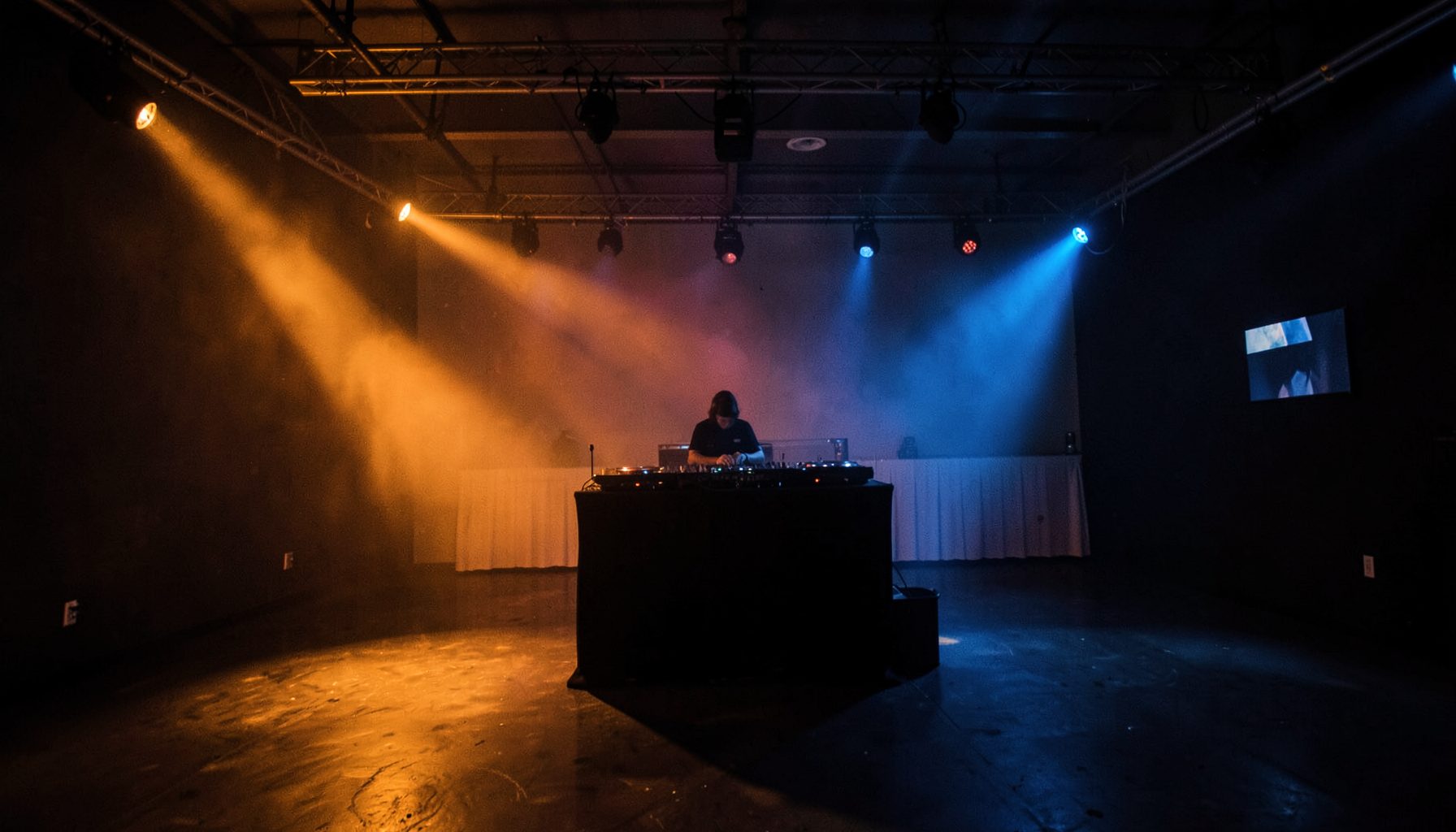
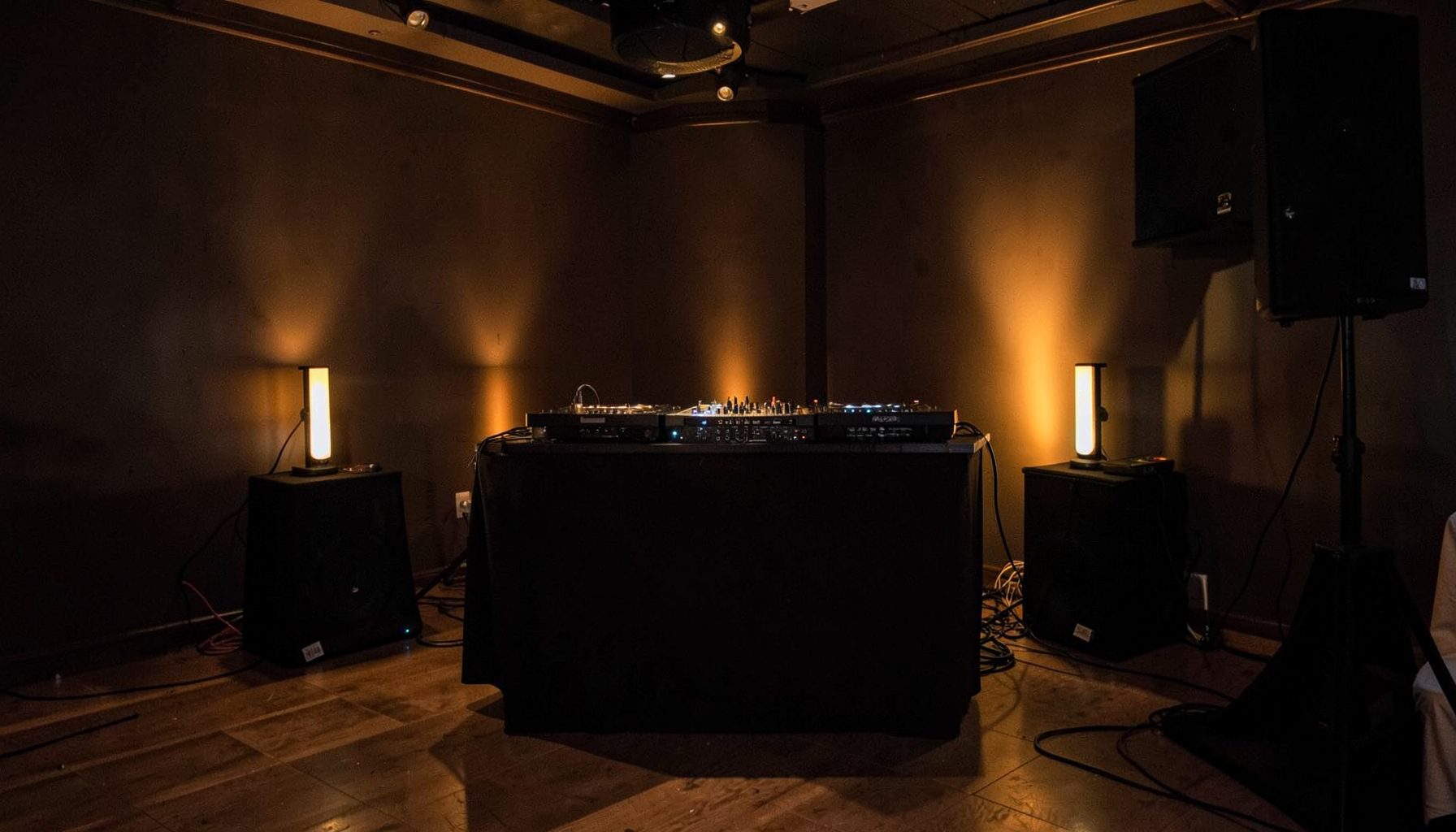
Design the booth as a controlled work area rather than an open display. Use a table front, barrier, cable covers and a clear access path. Keep drinks, bags and personal devices away from mixers, laptops and power boards. At venues in Brisbane or the Gold Coast, outdoor conditions can add wind, uneven surfaces and wet-weather risks to the usual crowd movement.
Include a short access and damage clause in the booking agreement. It can explain that guests must not enter the performance area, place belongings on equipment or interfere with cables, while also stating how incidents will be documented. The clause should be reviewed for enforceability and consistency with Australian consumer and contract requirements.
A risk review is particularly useful for mobile stages, portable sound shells and outdoor setups. N.A.M.E.’s discussion of mobile stage insurance highlights the importance of matching cover to the equipment and operating environment. A DJ working at a regional festival may face different exposure from an entertainer performing in a licensed function room in Canberra.
Before starting, brief the client and venue contact on the booth boundary and identify who controls access. During high-energy moments, position an assistant or use a physical barrier rather than relying on verbal instructions. Review near misses after each event, because a guest reaching over a controller or a drink placed beside a laptop can reveal a weakness before a phone is damaged.
Keep current certificates of currency, policy schedules, contracts and incident forms in a digital folder. Check that the policy covers the states and territories where you work, the activities you advertise and any employees or subcontractors you use. This preparation makes a genuine claim easier to assess and gives clients confidence in your professionalism.
If a guest’s phone falls into your DJ booth, focus first on safety, evidence and respectful communication. Report the circumstances promptly, avoid admissions or unauthorised settlements, and let the insurer assess whether legal liability exists. Review your booth layout and booking documents afterwards so the next event is safer.
For Australian entertainers, reliable insurance information and practical business support are valuable parts of operating professionally. Review your current coverage, keep your event records organised and use the available association resources before an incident occurs. When a claim arises, a measured response can protect the guest, the client relationship and the future of your entertainment business.
Get in Touch
Contact N.A.M.E. for membership inquiries, insurance questions, or general information.