
N.A.M.E. National Office
Professional Association for Mobile Entertainers
Email: office@nameentertainers.net
Mail: P.O. Box 144, Willow Grove, PA 19090
for Mobile Entertainers Get Insurance Info
Insurance for Mobile Entertainers
N.A.M.E. partners with Brown & Brown Insurance to offer comprehensive liability and equipment coverage designed specifically for DJs, bands, photographers, and other mobile entertainers. Coverage up to $5,000,000 is available.
Learn about insurance →News & Updates
Stay informed with the latest announcements from the National Association of Mobile Entertainers, including trade show coverage, webinar updates, and member spotlights.
N.A.M.E. publishes a monthly e-newsletter via Constant Contact featuring discounts, member benefits, and upcoming industry expos.
Sign up for the newsletter →Find an Entertainer
Search the N.A.M.E. directory of DJs and mobile entertainers who have invested in their business and uphold the quality standards of the association. Members include DJs, hypnotists, photographers, bands, event planners, booking agents, theatrical groups, and comedians.
Browse the directory →How to insure your DJ lighting and lasers against accidental breakage
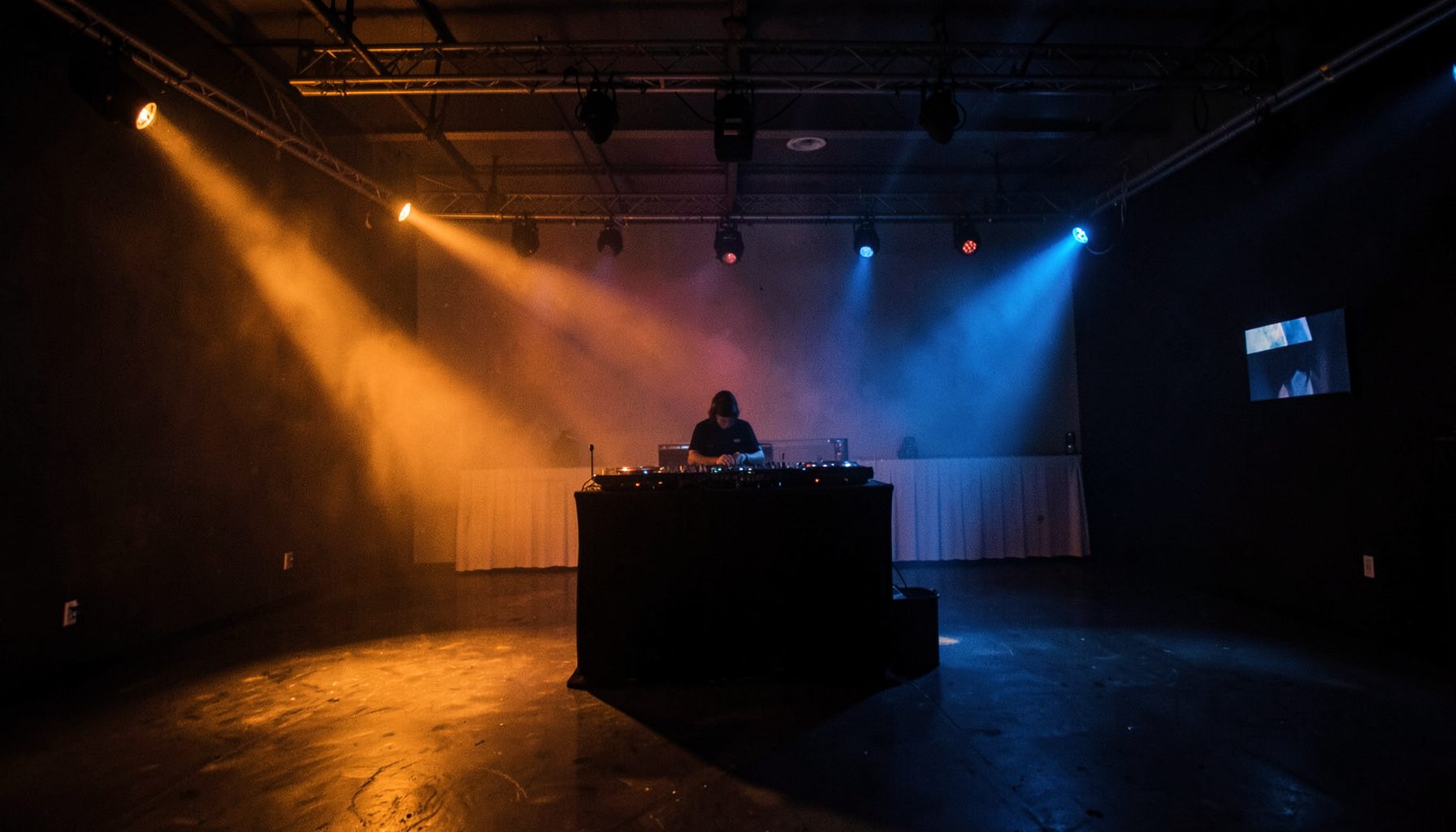
Mobile lighting rigs can be damaged in seconds: a fixture tumbles down a venue stairwell, a lens cracks during transport, or a controller suffers a liquid spill. The financial loss is rarely the full concern. A broken moving head can leave a wedding, club set or corporate event without its visual design, while last-minute hire may cost more than the original unit.
Good cover starts by separating accidental breakage from ordinary wear, equipment failure and legal responsibility for other people’s property or injuries. A suitable equipment policy should identify owned lighting and show lasers, state their insured values, define the damage covered and list the excesses and exclusions that matter. Venue requirements and safe operation must then be considered alongside that policy, not treated as evidence that insurance exists.
What accidental damage cover actually includes
Accidental damage insurance generally responds to a sudden, unforeseen loss or damage to covered equipment, such as a dropped fixture or broken lens during loading. It may pay to repair or replace the item after the excess and within the applicable coverage limit. A clear product disclosure is essential because “accidental” is defined in the policy wording, and useful practical insurance guidance can help identify the questions to ask before buying.
Expect exclusions for wear and tear, corrosion, gradual deterioration, faulty operation, poor maintenance, misuse and pre-existing damage. A power surge or unstable wiring may also be treated as an electrical disturbance rather than accidental breakage. Replacement lamps, batteries, tape and scratched cosmetic parts may be classed as consumables. Equipment breakdown cover is separate and normally addresses sudden mechanical or electrical failure, so ask whether both parts of the wording are present.
N.A.M.E. has supported mobile entertainers since 1996, offering liability and equipment insurance options plus business consulting, marketing support, certifications, webinars, seminars, discounts and educational resources. Its directory connects DJs, bands, photographers, planners and other specialists, while news and member updates track industry changes. For entertainers in Australia, that material is useful for comparing professional practices, but the policy itself should be underwritten for Australian law, currency and venue requirements.
Match cover to Australian event work
Australian conditions make handling risk a practical issue, not merely hypothetical. Sydney and Melbourne venues often involve narrow stairwells, laneway access and busy loading docks; Brisbane adds heat, humidity and summer storms. Wedding and festival crews frequently move heads, blinders, uplights and control boards through those spaces, often in hired vehicles. Insurance should therefore reflect setup, pack-down, overnight storage and transit, not merely the hours when the rig is operating on stage.
The local equipment market adds another layer. Some entertainers buy their own production gear, while others rent from established hire suppliers in major cities or borrow items for a short season. Check who owns each fixture and who carries the insurance during loading. Outdoor events also expose equipment to dust, rain, salt and heat, and Australian 230-volt electrical systems require compliant leads, distribution units and protective devices under the applicable state or territory rules.
Public liability responds if the DJ’s activities cause property damage or injury to others; it does not compensate for the DJ’s own broken lighting. Many Australian venues request a stated public liability limit, commonly $10 million, but the actual contract and policy schedule control. Work health and safety duties, electrical test-and-tag practices and laser approvals also vary by location and event type. Read the Australian Consumer Law disclosure and cancellation terms, and use the N.A.M.E. newsletter for continuing professional updates.
Compare the main protection options
No single policy answers every risk. Compare the response, financial limits and gaps rather than judging cover by the premium alone.
| Option | What it is for | Typical scope and limit | Main check |
|---|---|---|---|
| Equipment accidental damage | Damaged owned lighting, controllers, cases and accepted lasers | Repair or replacement after the excess, up to the sum insured or blanket limit | Wear, misuse, consumables and laser exclusions |
| Equipment breakdown | Sudden electrical or mechanical failure | Repair or replacement for a covered failure, often under a separate sub-limit | Whether breakdown overlaps with accidental-damage terms |
| Public and products liability | Claims involving injury or property damage caused by activities or hired equipment | Legal costs and compensation up to the policy limit | It does not cover the DJ’s own equipment |
| Transport and storage | Loss or damage while gear is moved or stored | Territorial, time and transport-method limits may apply | Overnight storage, festivals and courier handovers |
| Event cancellation | Financial loss when an insured event cannot proceed | Deposits, lost fees or other costs subject to named causes | Excess, weather exclusions and refund timing |
A strong event production package normally combines first-party accidental damage with public and products liability, then adds breakdown, transport and cancellation protection where the financial exposure justifies it. Check that the aggregate event limit is high enough for the entire rig. Read each sub-limit for lasers, lenses, controllers and cases, because a headline sum insured can conceal a much smaller limit for an individual category.
Cancellation terms need particular attention when a busy wedding or festival season changes. N.A.M.E.’s premium refund guide explains why instalments and timing can affect a returned premium; an Australian policy may have different cooling-off and endorsement rules. Confirm any refund in writing rather than relying on a verbal assurance from a broker or entertainment hire provider.
A practical cover checklist for mobile entertainers
Before requesting a quote, turn the rig into evidence a claims assessor can use. A detailed schedule and an honest record of how the equipment is used prevent avoidable disputes.
Inventory and evidence
- List each fixture, controller, stand and case by maker, model, serial number, purchase date, ownership status and current replacement cost.
- Separate high-value moving heads, blinders, uplights, par cans and show lasers from cases, lamps, batteries and general stock.
- Set insured values that reflect the policy’s replacement basis; check whether stock, hired gear and newly purchased items need separate treatment.
- Photograph every item before and after each load-in, including serial plates, existing marks, lenses, connectors and the complete rig in its cases.
- Keep invoices, ownership records, hire agreements, service logs and maintenance records with the digital inventory, accessible even when the venue lacks reliable internet.
That evidence also makes handover safer. A colleague or hire crew should know what was loaded, who signed for it and where each case belongs. Peer groups such as the IDF Bangalore network show the value of shared professional standards across markets; discussions about cases, cable handling and incident reports can reveal weaknesses without requiring anyone to disclose client or financial details.
Claims handling and safe operation
- Use padded cases, individual lens protection, secure stands, strain relief on cables and a documented load-in plan; keep cases closed and secured during vehicle travel.
- Complete a site-specific risk assessment, use a competent laser operator, follow manufacturer guidance, and obtain venue or authority approvals where high-powered displays require them.
- Test and tag portable electrical equipment under the applicable Australian rules, keep leads off wet ground and use compliant distribution equipment with suitable protection.
- Do not aim show lasers at the audience or flight paths; control exposure, use warning signs where appropriate and stop the display if weather, visibility or equipment condition creates risk.
- After an incident, make the area safe, photograph the damage, notify the insurer promptly, obtain repair estimates and retain the item, packaging and receipts until the claim is settled.
A claim is easier to support when the report distinguishes a specific accident from gradual ageing or an unexplained malfunction. State what happened, when it happened, who handled the item and what other parties have already done. Do not repair, discard or admit responsibility for third-party damage before insurer advice, although reasonable steps to prevent further loss must still be taken.
Act before the next event
Ask an Australian-authorised broker or insurer for a written quote that names the equipment rather than offering a vague “entertainer policy.” Provide the schedule, expected events, transport methods, storage arrangements and each venue’s liability requirement. Confirm directly whether professional show lasers are accepted, whether lenses are included, and whether hired or borrowed equipment needs a separate declaration.
Compare the product disclosure and policy schedule side by side. Record the named insured, premiums, excess, sum insured, individual sub-limits, exclusions, claims notification method and any cooling-off period. Make sure the amount insured can replace the rig at today’s prices, and check that transit, breakdown and public liability sit under sensible aggregate limits. A lower premium can be misleading if one essential component is excluded.
Act now by photographing the setup, completing the inventory and booking a policy review before the next paid event. Add each newly acquired light, laser, controller or case to the schedule immediately, and tell the insurer when performance locations, storage or transport arrangements change. Securing the terms before load-in is the surest way to keep an accidental loss from becoming an uncovered, show-stopping expense.
Get in Touch
Contact N.A.M.E. for membership inquiries, insurance questions, or general information.