

N.A.M.E. National Office
Professional Association for Mobile Entertainers
Email: office@nameentertainers.net
Mail: P.O. Box 144, Willow Grove, PA 19090
for Mobile Entertainers Get Insurance Info
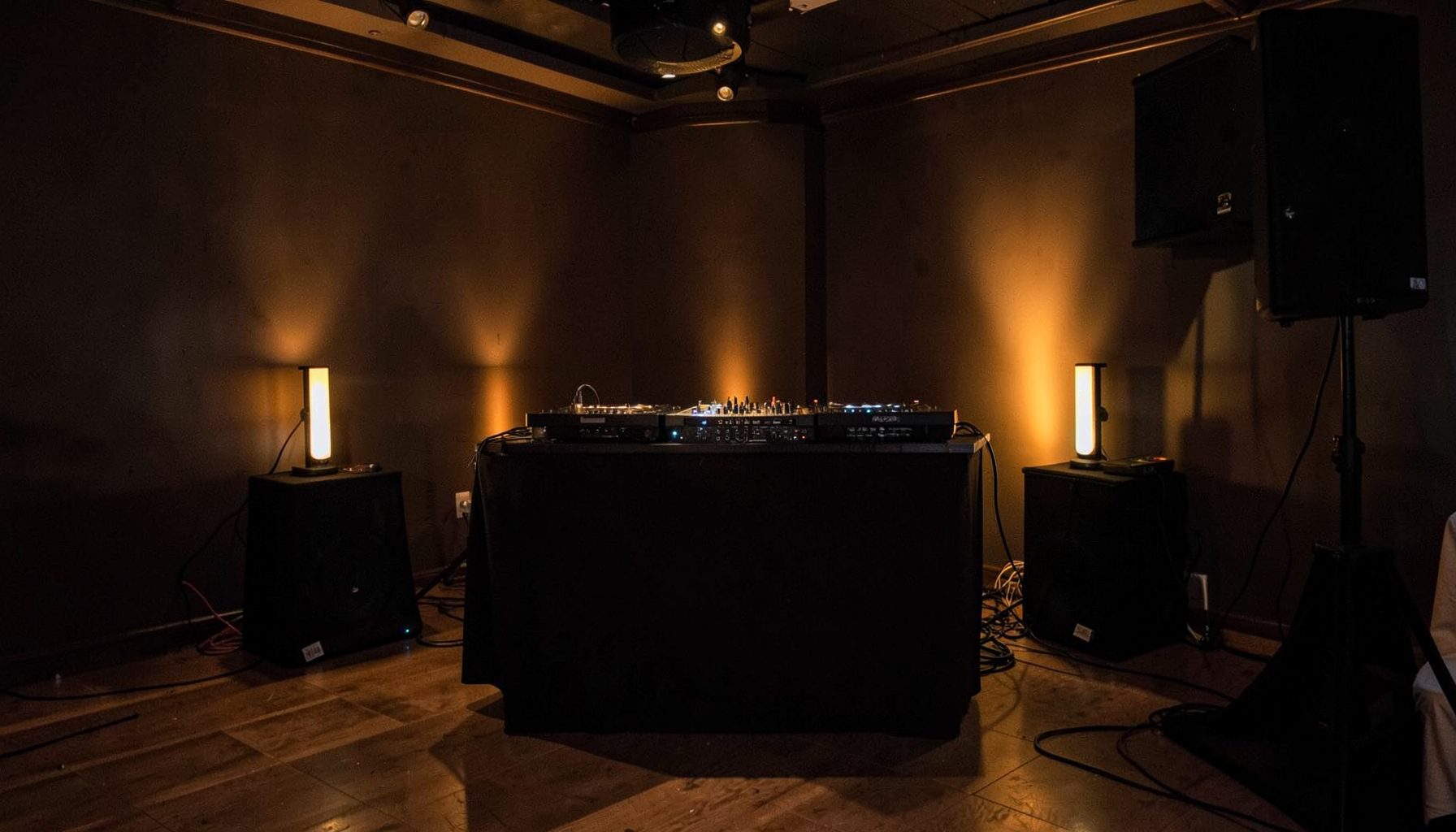
Insurance for Mobile Entertainers
N.A.M.E. partners with Brown & Brown Insurance to offer comprehensive liability and equipment coverage designed specifically for DJs, bands, photographers, and other mobile entertainers. Coverage up to $5,000,000 is available.
Learn about insurance →News & Updates
Stay informed with the latest announcements from the National Association of Mobile Entertainers, including trade show coverage, webinar updates, and member spotlights.
N.A.M.E. publishes a monthly e-newsletter via Constant Contact featuring discounts, member benefits, and upcoming industry expos.
Sign up for the newsletter →Find an Entertainer
Search the N.A.M.E. directory of DJs and mobile entertainers who have invested in their business and uphold the quality standards of the association. Members include DJs, hypnotists, photographers, bands, event planners, booking agents, theatrical groups, and comedians.
Browse the directory →When a Client Will Not Provide Proof of Insurance
Mobile entertainers often work in venues where several businesses share responsibility for the same event. A wedding DJ, band, photographer, event planner, or production company may carry its own liability coverage, while the client, venue, or sponsoring organization has a separate policy. When a client refuses to provide evidence of that coverage, the issue is more than a missing document. It may affect your contract, venue access, safety planning, and ability to respond to a claim.
If a client refuses to provide proof of their own insurance, avoid treating the situation as a personal disagreement. Handle it as a risk-management matter with a consistent process. The goal is to understand why the certificate is required, determine whether the booking can proceed safely, and preserve a clear record of every decision.
Your own business insurance remains essential even when another party promises to be covered. A client’s policy may exclude hired entertainers, contain restrictive conditions, or apply only to certain activities. Their coverage cannot replace your general liability protection, equipment coverage, or professional advice from an insurance broker.
Find out what the request actually means
“Proof of insurance” can refer to several different documents. A venue may want a certificate of insurance, commonly called a COI, showing that the client has commercial general liability coverage. In other cases, the venue may require the client to name the venue, property owner, or event organizer as an additional insured.
A client may also be asked to provide evidence of event insurance, liquor liability insurance, workers’ compensation coverage, or automobile liability insurance. These requirements are often written into the venue agreement rather than your entertainment contract. Before insisting on a document, identify who requested it, which policy is expected, the minimum limits, and the deadline.
Ask for the requirement in writing whenever possible. A short email from the venue or planner can clarify whether the client must supply the certificate or whether you are expected to provide your own. It can also reveal that the client misunderstood the request and believes your business insurance is the document needed.
Explain the business reason without creating conflict
Clients may resist because they see insurance paperwork as intrusive, expensive, or unrelated to the entertainment service. Some may assume that a homeowner’s policy, renters policy, or credit card protection automatically covers a public event. Others may be concerned that sharing policy information exposes private financial details.
Use neutral language that connects the request to the booking conditions. Explain that the venue may require documentation before allowing vendors or guests onto the property, and that you are trying to satisfy a standard risk-control procedure. Avoid suggesting that the client is irresponsible or that refusal proves they intend to cause trouble.
You can also tell the client exactly what is needed and what is not. A certificate generally summarizes the insurer, policy number, effective dates, coverage limits, and named insured. It is not the full policy and usually does not change coverage by itself. If the client needs help understanding their document, direct them to their broker rather than interpreting the policy for them.
Separate their coverage from yours
A client’s insurance and your entertainment business policy serve different purposes. The client’s event policy may respond to certain accidents involving the event as a whole, while your liability policy may address allegations connected to your services, setup, equipment, or employees. Coverage depends on the policy language, facts of the incident, exclusions, and applicable law.
A certificate of insurance is evidence that a policy was reported as active on the date it was issued. It does not guarantee that a claim will be covered, and it generally does not amend the policy. An additional insured endorsement, waiver of subrogation, or primary and noncontributory wording may require separate endorsements or specific policy language.
For a practical explanation of the information found on your own paperwork, review this declaration page guide. Understanding your own declarations page helps you answer basic administrative questions without promising protection that only an insurer can confirm.
| Situation | Reasonable response | Documentation to retain |
|---|---|---|
| Venue requires the client’s event policy | Ask the client to obtain a certificate from their broker | Venue requirement and client communications |
| Client says a personal policy is sufficient | Request written confirmation from the insurer or venue | Broker or venue response |
| Client refuses because of cost | Explain the contractual and access consequences | Quote, deadline, and refusal |
| Venue requires your COI instead | Contact your insurance provider and follow its process | Certificate request and issued COI |
| Coverage cannot be verified before the event | Pause, renegotiate, or decline the booking | Risk assessment and final decision |
Check the contract before making a decision
Your agreement should state which party is responsible for insurance, permits, venue compliance, and event-related approvals. If the contract says the client must provide proof by a specific date, their refusal may be a failure to satisfy a condition of the booking. If the contract says nothing, the situation may require a negotiated amendment rather than an immediate cancellation.
Review cancellation terms, deposits, postponement provisions, indemnification language, and any clause requiring compliance with venue rules. An indemnity clause does not create insurance and may be difficult to enforce if the client lacks the financial resources to pay a claim. Likewise, a client’s promise to “take responsibility” should not be treated as equivalent to verified coverage.
Communicate in writing and use a firm deadline. State the requested document, the reason it is needed, the date by which it must be received, and what will happen if it is not supplied. Possible consequences include postponing load-in, refusing to perform, moving the event to an approved location, or applying the contract’s cancellation terms.
Do not make the message sound like a threat. A professional notice protects both sides by showing that you identified a requirement early and gave the client a fair opportunity to resolve it.
Evaluate the level of exposure
The risk may be higher when the event involves alcohol, large crowds, children, outdoor staging, pyrotechnics, temporary structures, generators, complex power distribution, or unfamiliar premises. The client’s refusal deserves additional attention if they are organizing a public festival, corporate activation, fundraiser, or event where the venue has already made insurance a condition of entry.
Consider whether your work could expose you to allegations involving property damage, bodily injury, trip hazards, electrical equipment, noise, copyright-related issues, or negligent supervision. A DJ carrying speakers into a venue faces different operational concerns from a band using extensive lighting, rigging, and power equipment, but both need a documented approach to risk.
Contact your insurance professional before agreeing to unusual terms. Ask whether the event, location, equipment, subcontractors, and requested contractual language fall within your policy. N.A.M.E. provides member insurance resources and professional education for mobile entertainers who need to build more reliable business procedures.
A broker can also explain whether an endorsement is available, whether a certificate can be issued quickly, and whether a client’s requested additional insured status is appropriate. Keep the insurer’s guidance in your file, especially when the booking has unusual conditions.
Decide whether to proceed, pause, or decline
There is no universal rule that every client must provide their own insurance. Some private events may have no such requirement, while a venue may impose one for every vendor. The key question is whether proceeding would violate a written obligation, leave you exposed to an unacceptable hazard, or create a dispute that cannot be resolved before performance.
If the client is cooperative but delayed, you may be able to extend the deadline while keeping the booking conditional. If the client refuses outright and the venue requires proof, do not arrive hoping the issue will be overlooked. You could be denied access, lose setup time, or place yourself in breach of the venue’s rules.
A client who will not provide proof may still be financially responsible under the contract, but collecting damages can be uncertain. Base the decision on the actual risk, your policy terms, venue requirements, and the financial importance of the booking. Do not let a large deposit pressure you into accepting conditions your insurer or attorney would reject.
If cancellation becomes necessary, follow the agreement precisely. Avoid withholding documents, misrepresenting coverage, or declaring that an uninsured client is automatically liable for every possible loss. When substantial money or serious injury exposure is involved, obtain advice from a qualified attorney in the relevant jurisdiction.
Build a repeatable insurance process
A written procedure prevents every booking from becoming a new negotiation. Include insurance responsibilities in your inquiry form, proposal, service agreement, and final event questionnaire. Ask whether the venue requires a COI, additional insured endorsement, event policy, liquor liability coverage, or other evidence before accepting the date.
Use this checklist for future bookings:
- Request the venue’s insurance requirements as early as possible.
- Identify which party must obtain each certificate or endorsement.
- Put deadlines and consequences in the signed agreement.
- Keep all refusals, explanations, and broker communications in writing.
- Review unusual events with your insurance professional before committing.
Store certificates and related correspondence in a secure event file, with access limited to people who need the information. Check effective dates and named entities, but do not alter a certificate or present an expired document as current. If the venue requires an updated certificate, ask the insurer or authorized broker to issue it directly.
A consistent process also improves client education. When expectations appear in your standard paperwork, the request feels like part of normal event preparation rather than a last-minute accusation. That professionalism can protect the relationship even when the booking cannot proceed.
Protect your business by confirming the requirement, documenting the refusal, reviewing your contract, and obtaining qualified insurance advice before taking action. For mobile entertainers, a few clear steps before the event can prevent a costly dispute at the venue door or after an accident. Use your written policies and professional resources to make insurance verification a routine part of responsible booking management.
Get in Touch
Contact N.A.M.E. for membership inquiries, insurance questions, or general information.