
N.A.M.E. National Office
Professional Association for Mobile Entertainers
Email: office@nameentertainers.net
Mail: P.O. Box 144, Willow Grove, PA 19090
for Mobile Entertainers Get Insurance Info
Insurance for Mobile Entertainers
N.A.M.E. partners with Brown & Brown Insurance to offer comprehensive liability and equipment coverage designed specifically for DJs, bands, photographers, and other mobile entertainers. Coverage up to $5,000,000 is available.
Learn about insurance →News & Updates
Stay informed with the latest announcements from the National Association of Mobile Entertainers, including trade show coverage, webinar updates, and member spotlights.
N.A.M.E. publishes a monthly e-newsletter via Constant Contact featuring discounts, member benefits, and upcoming industry expos.
Sign up for the newsletter →Find an Entertainer
Search the N.A.M.E. directory of DJs and mobile entertainers who have invested in their business and uphold the quality standards of the association. Members include DJs, hypnotists, photographers, bands, event planners, booking agents, theatrical groups, and comedians.
Browse the directory →Managing A Speaker Cable Trip At A Corporate Event
A speaker cable can become a serious liability issue within seconds at a corporate event. Guests may be moving between presentations, networking areas, catering stations, and exits, often while carrying drinks or looking at their phones. Even a cable that seemed safely positioned during setup can create a hazard once the room becomes busy.
If a guest trips over your speaker cable, your first priorities are to protect the person, stabilize the scene, and respond professionally. The incident may result in an injury claim, property damage, a complaint from the client, or a review of your event safety practices. A calm, organized response can help reduce harm and preserve important evidence.
Mobile entertainers, DJs, bands, and event production professionals should treat cable management as part of their standard risk management process. Preparation before the event makes it easier to act correctly when something unexpected happens.
Check The Guest And Secure The Area
Stop the music or presentation if necessary and approach the guest calmly. Ask whether they are hurt, but avoid diagnosing the injury or telling them to stand up. If the person appears seriously injured, is unconscious, has struck their head, or reports severe pain, call emergency services immediately and follow the dispatcher’s instructions.
Keep the surrounding area clear. Ask an employee, venue representative, or assistant to redirect foot traffic while you remain with the guest. Do not allow people to step over the cable, move equipment unnecessarily, or gather around the injured person. A second trip could create another injury and complicate the incident.
Use neutral language. Say that you are sorry the incident occurred and that you want to help, but do not speculate about fault or promise payment. Statements such as “That cable should never have been there” may later be interpreted as an admission of liability, even if you were trying to be considerate.
Preserve The Scene And Gather Facts
Once the guest has received appropriate care, document the area before changing its arrangement, if doing so does not create an ongoing danger. Take photographs showing the cable route, flooring, lighting, nearby furniture, entrances, warning signs, speaker placement, and any tape or cable ramp. Include wide shots for context and closer images of the specific location.
Write down the time, room name, event type, and what you observed immediately before and after the trip. Record the guest’s name and contact information if they are willing to provide it, along with the names of witnesses. Ask witnesses to describe what they saw in their own words rather than leading them toward a particular explanation.
Do not post photos, video, or commentary about the incident on social media. Corporate events often involve confidential business activities, recognizable employees, and privacy concerns. Keep your records factual, secure, and available for your insurer or legal representative.
Coordinate With The Corporate Client
Notify the event contact or venue manager promptly. A corporate client should not learn about a potential injury through a guest or a social media post. Give a concise factual account: when the incident occurred, where it happened, whether emergency services were contacted, and what steps were taken.
Allow the client to follow its own incident-reporting procedure. Many companies have security teams, risk managers, or standardized forms that must be used for injuries on their premises. Cooperate with reasonable requests, but review any written statement carefully before signing it. Correct factual errors and avoid adding assumptions about who was responsible.
The client may ask you to continue the program, relocate the speaker, or remove the cable from the traffic path. Accommodate reasonable safety measures after the scene has been documented. If the guest leaves before providing details, record that fact and note who witnessed the departure.
Understand Insurance And Claim Handling
A trip involving your equipment may fall under general liability coverage, depending on the circumstances and the terms of your policy. Your equipment policy may address damage to your property, but it generally does not replace liability coverage for a guest’s bodily injury. Promptly notify your insurance provider when an incident could lead to a claim, even if the guest initially says they are fine.
Your insurer can explain what information is needed, how communication should be handled, and whether an adjuster will contact the client or venue. Avoid negotiating a settlement, reimbursing medical expenses, or accepting a demand from the injured person without guidance. A well-intended payment can affect the claim and may create confusion about responsibility.
The deductible is another factor to understand before an event. Reviewing deductible options can help you choose coverage that fits your business finances while leaving adequate protection for a serious incident. Keep your policy declarations, certificates of insurance, and claims contact information accessible during every booking.
| Situation | Immediate focus | Documentation to keep |
|---|---|---|
| Minor stumble with no reported injury | Remove the hazard and check on the guest | Time, location, witnesses, photos |
| Reported pain or visible injury | Call medical assistance and notify the client | Guest details, statements, incident report |
| Damage to clothing or personal property | Avoid promising reimbursement and notify your insurer | Photos, description of damage, receipts if provided |
| Serious injury or emergency response | Preserve the scene and follow professional instructions | Emergency details, venue records, all communications |
| Disputed version of events | Remain factual and avoid arguments | Independent witness accounts, setup photos, contracts |
Review The Setup Before Doors Open
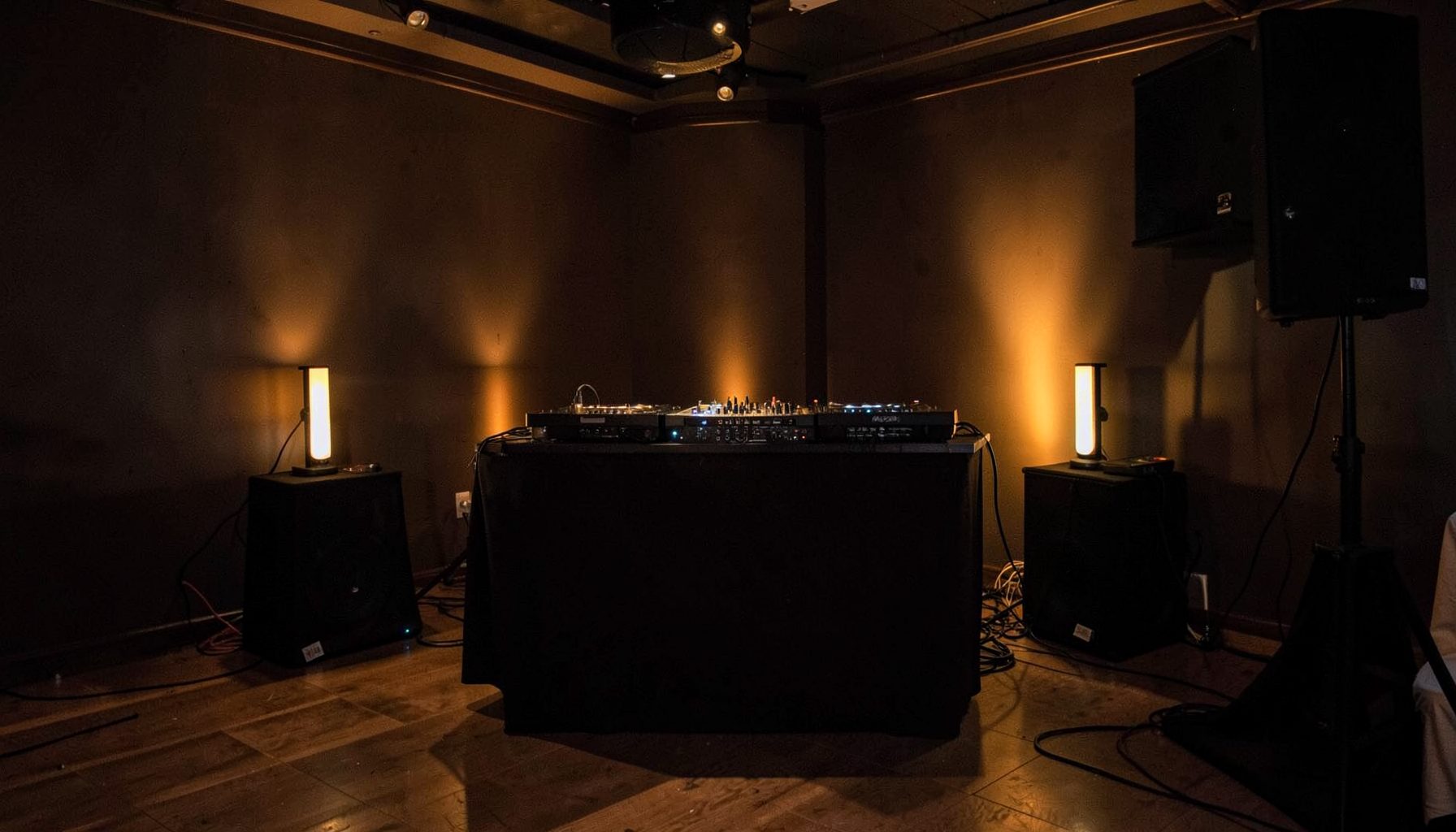
The best response begins with prevention. Route speaker cables away from walkways whenever possible, especially near registration desks, buffet lines, dance floors, restrooms, and exits. Run cables along walls or behind staging, and use commercial cable ramps or brightly visible floor covers where crossing a pathway cannot be avoided.
Gaffer tape can help secure a cable, but it is not a substitute for a proper ramp in a busy public area. Tape should be applied smoothly, without curled edges, wrinkles, or loose sections. Check the floor surface and lighting conditions because a dark cable on a dark carpet may be difficult to see even when it is technically secured.
Walk the room from a guest’s perspective before the event starts. Look toward the stage, not at the floor, and consider how a person carrying a plate, talking with colleagues, or using a mobility aid will navigate the space. Recheck the setup after furniture is moved, after catering arrives, and whenever the audience layout changes.
Build A Repeatable Safety Procedure
Create a written pre-event checklist that covers cable routes, equipment stability, electrical access, emergency exits, lighting, and communication with venue staff. Assign one person to monitor the setup during the first part of the event if you are working with an assistant or crew. A quick inspection after the room fills can reveal hazards that were not obvious during an empty-room sound check.
Contracts should identify who controls the venue, who supplies power, and how changes to the floor plan are approved. Ask the client or venue to tell you about required insurance limits, safety rules, loading procedures, and incident-reporting expectations before the event. Clear responsibilities reduce confusion when multiple vendors are working in the same room.
Professional resources can also strengthen your operating practices. N.A.M.E. has served mobile entertainers nationwide since 1996, offering insurance options, education, certifications, business support, and access to a directory of entertainment professionals. Reviewing the organization’s member benefits can help you identify resources relevant to liability protection and day-to-day event operations.
Keep An Incident Kit Ready
A small incident kit can make your response more orderly. Keep it with your event equipment rather than leaving it in the vehicle. Useful items include a charged phone, flashlight, measuring tape, pen, notebook, spare gaffer tape, cable ramps, disposable gloves, and printed insurance contact details. A digital incident form stored securely on your phone can also save time.
Use the following actions as a practical operating checklist:
- Stop the activity, check the guest, and call emergency services when appropriate.
- Assign someone to control traffic and notify the venue or corporate event contact.
- Photograph the hazard and surrounding area before making nonessential changes.
- Record names, times, witness accounts, and all relevant communications.
- Notify your insurer promptly and avoid admissions, promises, or private settlements.
After the event, write a short internal review while the details are fresh. Identify whether the problem came from the original setup, a later furniture change, inadequate lighting, damaged tape, or an unexpected guest route. Correct the process rather than blaming an individual, and update the checklist before the next booking.
Protect Your Business Beyond One Event
A cable trip can expose weaknesses in several areas at once: equipment placement, staff training, insurance limits, client communication, and recordkeeping. Treat the incident as a business matter even when the guest seems uninjured. A delayed complaint can arrive days or weeks later, when memories have faded and the room has been reset.
Keep contracts, certificates, invoices, setup photographs, maintenance records, and correspondence organized by event. If a claim develops, these records can help establish what services you provided and how the equipment was positioned. Separate factual documentation from personal opinions or emotional reactions.
Your risk planning should also account for other common losses, including theft, transit damage, and equipment failure. Guidance on stolen equipment claims can be useful when reviewing the difference between liability protection and coverage for your own gear.
Use every corporate event as an opportunity to demonstrate reliability. Safe cable routing, prompt communication, accurate documentation, and appropriate insurance show clients that professional entertainment includes responsible site management. Before your next booking, inspect every traffic path, confirm your policy details, and keep your incident procedure ready for immediate use.
Get in Touch
Contact N.A.M.E. for membership inquiries, insurance questions, or general information.