

N.A.M.E. National Office
Professional Association for Mobile Entertainers
Email: office@nameentertainers.net
Mail: P.O. Box 144, Willow Grove, PA 19090
for Mobile Entertainers Get Insurance Info
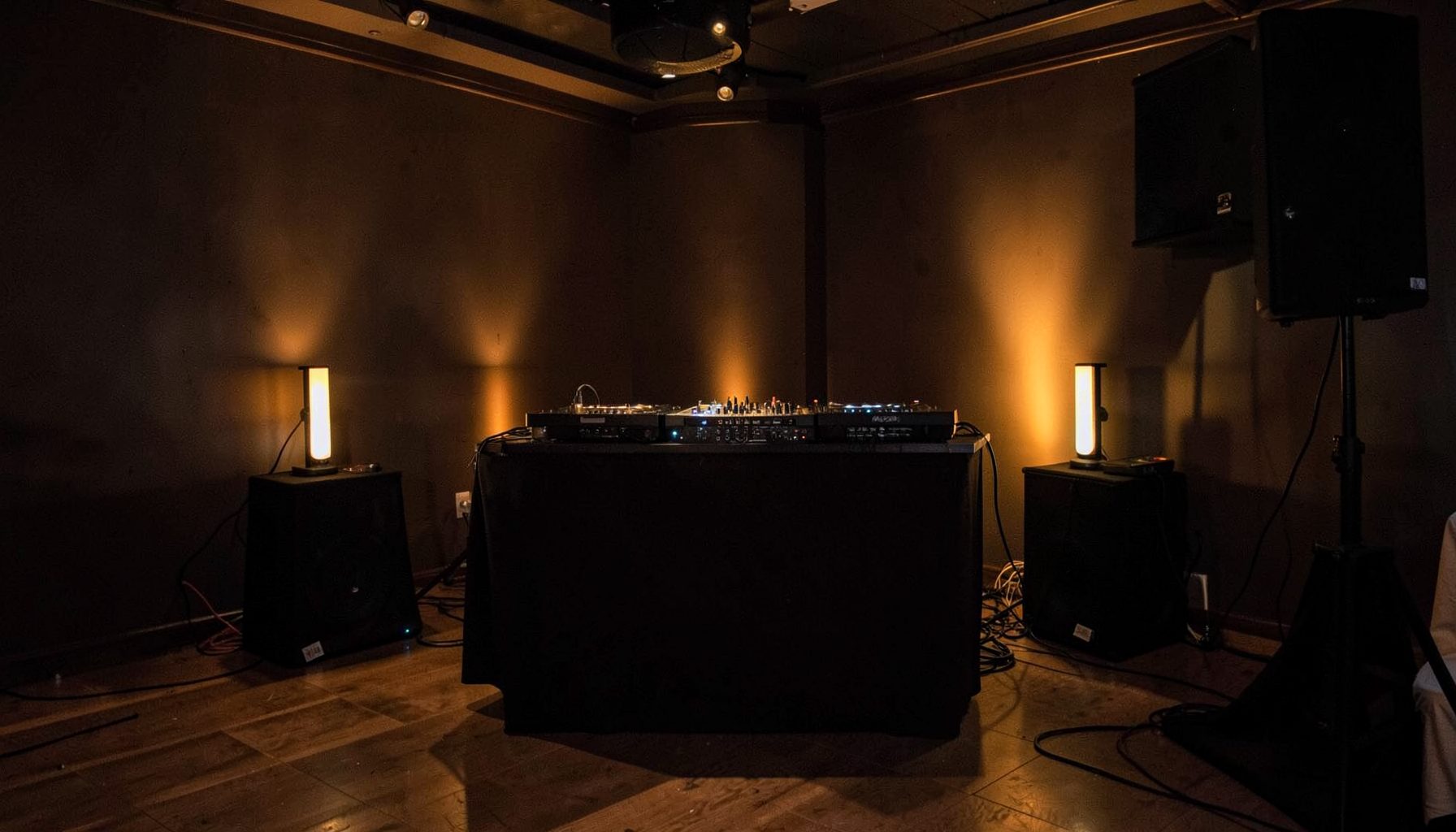
Insurance for Mobile Entertainers
N.A.M.E. partners with Brown & Brown Insurance to offer comprehensive liability and equipment coverage designed specifically for DJs, bands, photographers, and other mobile entertainers. Coverage up to $5,000,000 is available.
Learn about insurance →News & Updates
Stay informed with the latest announcements from the National Association of Mobile Entertainers, including trade show coverage, webinar updates, and member spotlights.
N.A.M.E. publishes a monthly e-newsletter via Constant Contact featuring discounts, member benefits, and upcoming industry expos.
Sign up for the newsletter →Find an Entertainer
Search the N.A.M.E. directory of DJs and mobile entertainers who have invested in their business and uphold the quality standards of the association. Members include DJs, hypnotists, photographers, bands, event planners, booking agents, theatrical groups, and comedians.
Browse the directory →Why your policy might require secure equipment straps
Mobile entertainers in Australia often carry their livelihood in one vehicle: a DJ console, mixer, lighting controllers, microphones, laptops, backline, cameras and props may move between a warehouse, rehearsal space and a live event. A locked cabin protects against theft, but not sudden braking, a pothole or gear shifting inside the car. Transport security is part of risk management, not merely a habit for loading a ute.
Understanding why your policy might require you to secure equipment with straps during transport starts with the insurer’s view of avoidable loss. If gear can readily roll, slide or fall, the insurer may regard the resulting damage as caused by inadequate precautions, even when nobody deliberately mishandled it. The wording can be stricter than ordinary road rules and may form part of the contract under which cover was granted.
A policy condition does not guarantee payment in every case, and a missing strap does not automatically void all cover. Claims still turn on the precise terms, the cause of loss, the item’s value and the steps taken before and after an incident. The practical response is to match the loading method to the wording, use sensible restraints and retain proof that the equipment was packed properly.
Transport risks across Australian cities
Dense traffic around Melbourne, Sydney and Brisbane creates frequent stops, sharp turns and short gaps where unsecured objects gain momentum. Melbourne tram corridors, Sydney bus lanes and Brisbane river crossings add distractions that can mask movement inside the vehicle. Even a modest impact can turn an unsecured microphone, monitor or lighting fixture into a projectile.
Australian conditions make packing harder than a generic checklist suggests. Summer temperatures can exceed 35°C, while sudden rain, coastal salt and road dust enter open trays and damage connectors. Soft bags can settle, absorb moisture and allow hard components to knock together. A rigid outer case protects against impacts, but it still needs restraint so it cannot travel across a cargo area.
Many operators use a ute, hatchback, van or roof rack, with valuable electronics and bulky backline sharing the same space. Weight distribution matters as much as tie-down strength: too much gear over the rear axle changes handling, while a tall load can lift in crosswinds. The broader risk-management material published by Gurans Life can provide a useful second check alongside an insurance schedule and equipment manual.
How policy wording affects a claim
Equipment policies often describe cover during storage, transit and use with phrases such as “securely packed,” “protected at all times” or “reasonable precautions taken.” Insurers may interpret those phrases as requiring suitable cases, closed lids, functioning fasteners and vehicle restraints. A stated condition differs from an exclusion: exclusions narrow cover, while a condition can qualify the insurer’s obligation to pay. Exact wording must be checked rather than assumed.
Public liability cover responds mainly to claims from third parties for injury or property damage. Equipment cover responds to the insured gear itself and is more likely to contain transport conditions. A policy may also distinguish theft from accidental damage, apply different excesses to different items, or require an item to remain in a case while being moved. High-value or unusual kit can attract closer scrutiny. Advice on vintage console insurance explains how age, construction, originality and replacement cost may affect the policy and proof required after damage.
Photograph each case, serial number and restraint before departure, and keep invoices, service records and the equipment schedule. After an incident, record what moved, what struck what and whether the vehicle or packing contributed. These records help an insurer distinguish an accidental impact from poor transport practice. They also support a claim where the policy provides agreed replacement or loss-of-value cover rather than a simple repair invoice.
Choosing straps and secure anchor points
Restraint type should follow the case, weight and vehicle rather than a habit of keeping one reel in the boot. Cam-buckle cargo straps suit many road cases because they apply firm tension without crushing delicate surfaces. Ratchet straps offer greater control but require careful adjustment. For small, fragile or awkwardly shaped items, a padded case or secondary tie may be better than forcing a heavy strap around a display housing.
Every restraint needs a rated, undamaged anchor point attached to the vehicle’s structure. A strap looped around a loose seat, grab handle or seat rail may hold in a stationary display and fail during hard braking. Keep tie-down points clear of doors, hinges and sharp edges, and replace frayed webbing, distorted buckles or heat-damaged sections. Redundant restraints are sensible for a heavy case containing irreplaceable equipment.
Secure large, heavy items first and place them low and centrally where possible. Fill gaps with soft material so movement cannot start, but avoid stacking a flight case on loose foam. The restraint should limit travel without forcing pressure into connectors, hinges or screens. Test the load with a firm hand push in several directions before closing the vehicle, and recheck after the first stop because straps can settle as heat and vibration change.
Road rules and regional touring
Road rules in each Australian state and territory require a load to be secured so it is not likely to fall from the vehicle or become a hazard. Examples include the New South Wales Road Rules 2014, Victoria’s Road Safety Road Rules 2009 and Queensland’s Transport Operations (Road Use Management) Road Rules 2009. Police or transport inspectors can penalise an insecure load, and an accident may also affect a claim under the driver’s policy or the vehicle owner’s cover.
Regional touring makes the legal standard only the starting point. A run from Melbourne to regional Victoria, Sydney to the Hunter Valley or Brisbane to the Gold Coast can involve long periods of vibration, motorway traffic, fatigue stops and roadside inspections. A restraint that felt secure at the venue may no longer be suitable after several hours in a fully loaded ute. Check the load at every stop and carry suitable tools for minor adjustments.
Equipment with unusual hazards needs specific consideration. Guidance on pyrotechnic insurance changes explains how adding flame effects or pyrotechnics can change premiums, risk and disclosure duties; secure transport does not replace those declarations. Australian event organisers may also require approval from the relevant state fire authority and compliance with venue safety procedures. Keep the products, permits, safety equipment and manufacturer’s handling instructions together.
Special risks for higher-value entertainment kit
N.A.M.E. has supported mobile entertainers nationwide since 1996, and its association member resources cover insurance information alongside consulting, marketing support, certifications, webinars, seminars, discounts, industry news and a professional directory. For an operator carrying several thousand dollars of equipment, membership also provides a route to ask about cover, documentation and the business pressures surrounding each booking.
Different equipment creates different transport demands. Laptops and controllers need shock and moisture protection, cameras need padded separation, backline needs structural restraint, and bespoke LED units may be both heavy and awkward. Generic “music equipment” descriptions on a schedule may not identify every item. Compare the declared limits, excess, territorial cover, transit conditions and exclusions for each category, especially when one hire case contains items purchased at different times.
Ask the insurer or broker in writing what secure transport means for that schedule. Rated straps, closed flight cases, immobilised controls, separate high-value items and setup photographs are examples. Record the answer and review it whenever the vehicle, main equipment or usual touring route changes. An association adviser can help frame the question, but the policy document and the insurer’s written interpretation remain the authoritative sources.
Comparing the main transport safeguards
Protection works best in layers. Restraint controls movement inside the vehicle, a case controls impact and exposure, and insurance responds to the remaining accidental risk. Choosing one control while ignoring the others leaves a weakness: straps cannot prevent heat damage, and a strong case cannot help if it is not anchored.
No method addresses every item equally. The main options differ in how they restrain the load, what they cost and what an insurer may regard as reasonable care:
| Safeguard | Best suited to | Important limitation | Insurance relevance |
|---|---|---|---|
| Tie-down straps | Road cases and heavy cases in vans or utes | Incorrect tension can damage cases, and rated anchors are essential | Often supports a requirement to secure equipment |
| Hard flight case | Valuable, fragile or multi-item loads | Heavy, and still vulnerable to movement without restraints | Shows protection against impact when closed and secured |
| Padded soft case | Laptops, controllers, microphones and cables | Provides less crush and puncture protection than a rigid case | Useful when suitable protective cases are required |
| Cargo barrier or net | Smaller items in a passenger vehicle | Does not stop heavy cases sliding or toppling | Helps, but may not replace case restraints |
| Rack or ute tray | Bulk backline and touring equipment | Exposed to weather and additional load-security requirements | Needs weather protection and vehicle-specific tie-downs |
Select safeguards that suit the declared item and use them consistently. Save setup photographs with the trip date, venue and vehicle registration. They create a useful record without suggesting that any single arrangement guarantees cover.
Secure the next load with confidence
Before the next booking, treat the loading bay as part of the event setup rather than the last ten minutes before departure. Identify the insurer’s transport conditions, inspect the vehicle and restraints, assign responsibility for the load and check that every high-value case has a suitable anchor. Consistency reduces both the chance of damage and the difficulty of proving what happened.
- Read the equipment schedule and ask the insurer in writing which packing and restraint terms apply.
- Use rated straps and vehicle anchor points for every heavy case; never rely on a loose seat as the sole restraint.
- Photograph closed cases, serial numbers and the secured load before departure and after each major stop.
- Separate fragile items, secure heavy items low and centrally, and protect connectors from heat, rain and road dust.
- Review the setup after changing vehicles, routes, cases or equipment, and replace worn straps before they fail.
Contact your insurer or broker today, confirm the transport conditions for your schedule and document the secured load before the next trip. That routine protects the equipment, reduces business interruption and gives a claim the strongest possible starting point.
Get in Touch
Contact N.A.M.E. for membership inquiries, insurance questions, or general information.