
N.A.M.E. National Office
Professional Association for Mobile Entertainers
Email: office@nameentertainers.net
Mail: P.O. Box 144, Willow Grove, PA 19090
for Mobile Entertainers Get Insurance Info
Insurance for Mobile Entertainers
N.A.M.E. partners with Brown & Brown Insurance to offer comprehensive liability and equipment coverage designed specifically for DJs, bands, photographers, and other mobile entertainers. Coverage up to $5,000,000 is available.
Learn about insurance →News & Updates
Stay informed with the latest announcements from the National Association of Mobile Entertainers, including trade show coverage, webinar updates, and member spotlights.
N.A.M.E. publishes a monthly e-newsletter via Constant Contact featuring discounts, member benefits, and upcoming industry expos.
Sign up for the newsletter →Find an Entertainer
Search the N.A.M.E. directory of DJs and mobile entertainers who have invested in their business and uphold the quality standards of the association. Members include DJs, hypnotists, photographers, bands, event planners, booking agents, theatrical groups, and comedians.
Browse the directory →Why Your Home Policy May Leave Your Sound System Underinsured
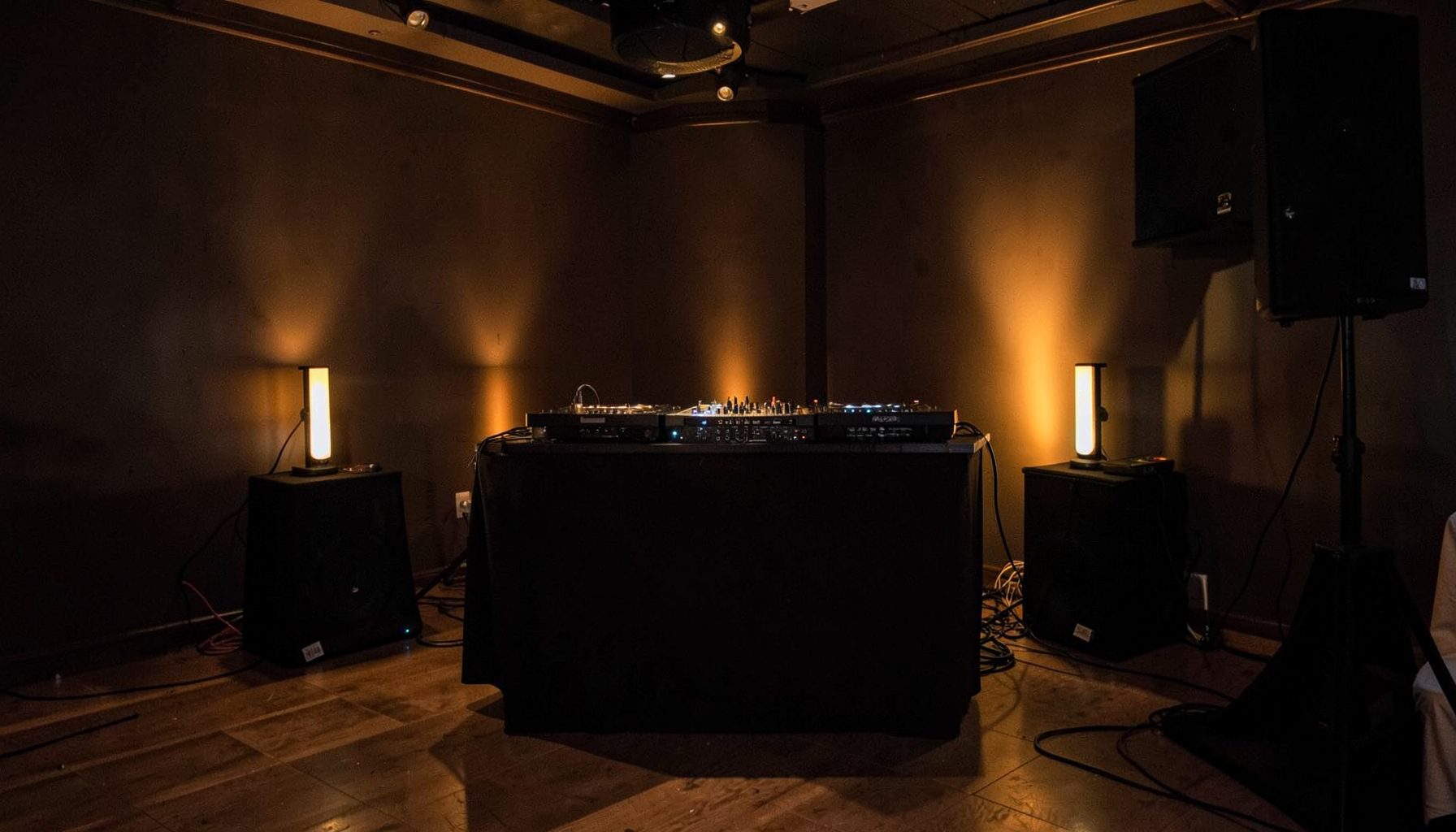
A mobile entertainer’s sound system can represent a substantial investment. Speakers, mixers, microphones, amplifiers, stands, cables, wireless systems, lighting controllers, and backup equipment may have taken years to assemble. When that gear is used for weddings, corporate functions, school events, and private parties, it becomes part of a working business rather than ordinary household property.
Many DJs and other entertainers assume their homeowners insurance will respond if equipment is stolen, damaged, or destroyed. That assumption can create a serious coverage gap. A home policy is designed primarily for personal risks, while a professional audio setup is exposed to business use, transportation, venue hazards, and third-party claims.
The difference may remain invisible until a loss occurs. Reading the policy before an incident can reveal restrictions involving business property, off-premises equipment, liability, deductibles, and valuation. Understanding those limits gives entertainers time to arrange suitable protection instead of discovering the problem while trying to replace a complete rig.
How Homeowners Insurance Treats Business Equipment
A homeowners policy may provide some coverage for business property kept at the residence, but the amount and scope can be limited. Policies commonly distinguish between personal belongings and property used for business. Even when business equipment is included, an internal sublimit may apply, leaving only a fraction of the system’s value insured.
The location of the loss also matters. A policy may offer one level of protection for business property at the insured home and a much lower limit when the equipment is away from the premises. A speaker system stolen from a locked home office could be treated differently from the same system taken from a venue parking lot, hotel loading area, or vehicle.
A sound system also tends to move frequently. It may be stored in a garage, transported in a trailer, loaded into a ballroom, or left temporarily at a client’s property. Standard home coverage may not be designed around that pattern. The fact that an entertainer owns the equipment does not automatically mean every business-related loss is covered.
Why Replacement Cost Can Be Misleading
The value of a professional rig is more complicated than the original purchase price. Some equipment depreciates quickly, while specialized or discontinued components may cost more to replace than expected. A policy that settles on actual cash value can reduce a claim payment based on age, wear, and condition.
Replacement cost coverage may produce a stronger result, but it still depends on the policy wording, documentation, and applicable limits. The insurer may require proof that the equipment was actually replaced, and a general property limit may be insufficient for several losses at once. A complete system can include dozens of separate items, each with a different value and purpose.
Accurate records help establish what was owned and what it would cost to replace. Keep invoices, serial numbers, photographs, model details, purchase dates, and current prices in a secure digital location. Include accessories that are easy to overlook, such as cases, cables, power conditioners, stands, adapters, and batteries. Those smaller items can add significantly to the total claim.
Liability Is Separate From Gear Protection
Property coverage addresses damage to or loss of equipment. It does not replace commercial general liability insurance. If a guest trips over a speaker cable, a powered unit causes a fire, or a loudspeaker falls and injures someone, the resulting claim may involve medical costs, legal defense, settlement demands, or property damage.
A homeowners policy may exclude or restrict liability arising from business activities. Even where limited incidental business coverage exists, it may not match the risks of operating as a DJ, live performer, event production company, or mobile entertainment professional. Venues and corporate clients may also require proof of liability insurance before allowing an entertainer to work.
Business liability coverage can help address claims connected with services, equipment operation, and events. The appropriate limits depend on the type of work, venues served, contracts, and risk profile. Entertainers should examine whether their policy includes relevant operations and whether additional insured requests can be handled when a venue or client requires them.
Mobile Work Creates Additional Exposure
Transportation is a major source of risk for mobile entertainers. Gear may be damaged while being loaded, involved in a traffic accident, stolen from a vehicle, or exposed to rain during an outdoor setup. The policy that covers a personal automobile does not necessarily cover business equipment inside it, and a commercial auto policy may address vehicle risks without fully insuring the contents.
Some insurers impose conditions involving unattended vehicles. For example, equipment left overnight in an unlocked vehicle, visible through windows, or stored in an unapproved location may be subject to exclusions or reduced coverage. A trailer may require its own policy, and permanently installed equipment can be treated differently from portable property.
Contracts can add another layer of responsibility. A client agreement may make the entertainer responsible for rented, borrowed, or leased equipment, even if the entertainer did not own it. Review how the policy handles property in the entertainer’s care, custody, or control. That wording can be important when working with a venue’s audio equipment or accepting a deposit for a rental system.
Comparing Personal And Business Protection
The most useful comparison is not simply the premium. It is the relationship between the policy’s exclusions, limits, deductible, valuation method, territory, and the way the equipment is actually used.
| Coverage concern | Typical home policy issue | Business-oriented protection to review |
|---|---|---|
| Equipment at home | Business property may have a low sublimit | A scheduled or blanket equipment limit based on current value |
| Equipment at venues | Off-premises limits may be restricted | Coverage designed for mobile and temporary locations |
| Theft from a vehicle | Conditions and exclusions may apply | Inland marine or mobile equipment coverage |
| Accidental damage | May be excluded or narrowly defined | Broader causes-of-loss options, subject to terms |
| Liability claims | Business activities may be excluded | Commercial general liability for entertainment operations |
| Rented or borrowed gear | Care, custody, and control may be limited | Coverage specifically addressing non-owned equipment |
| Claim settlement | Depreciation can reduce payment | Replacement cost options where available |
These categories are starting points rather than guarantees. Insurance contracts differ by carrier, state, endorsements, and the details of the business. An entertainer should compare the actual declarations, exclusions, definitions, and endorsements instead of relying on a verbal description of “full coverage.”
Coverage Details Worth Reviewing
Start with a complete equipment inventory and separate personal property from business assets. Include equipment owned by a company, jointly owned equipment, promotional gear, backup systems, and items kept in storage. If the system has grown since the policy was purchased, the original limit may now be inadequate.
Ask how the policy responds to common scenarios: theft from a vehicle, accidental drops, liquid damage, power surges, weather exposure, equipment left overnight at a venue, and loss during transit. Find out whether claims are settled at actual cash value or replacement cost, whether there is a per-item limit, and whether a deductible applies to every loss.
A professional association can also provide practical education when coverage decisions feel unfamiliar. N.A.M.E. publishes resources for mobile entertainers and maintains member benefits that can help business owners understand insurance and operational issues. Its discussion of equipment insurance basics offers a useful perspective on how coverage questions apply to event professionals beyond the DJ market.
Steps To Strengthen Your Protection
A careful review does not require abandoning a home policy. Homeowners insurance still serves an important personal purpose, but it may need to be separated from the insurance strategy for a revenue-generating entertainment business.
- Calculate the current replacement cost of every major component, including accessories and backup equipment.
- Ask an insurance professional about business property, inland marine, liability, vehicle, trailer, and non-owned equipment coverage.
- Confirm whether equipment is protected at home, in storage, in transit, inside vehicles, and at event venues.
- Review contracts for requirements involving certificates of insurance, additional insureds, rented gear, and indemnity obligations.
- Store receipts, serial numbers, photographs, maintenance records, and policy documents in a secure cloud location.
Update the inventory whenever equipment is purchased, sold, upgraded, or permanently removed from service. A quarterly review can be especially helpful for entertainers who expand their inventory seasonally or add lighting, video, staging, or production services.
Working With An Insurance Professional
A knowledgeable insurance agent or broker can identify gaps by examining how the business operates in practice. Be specific about the services offered, annual revenue, number of events, storage arrangements, transportation methods, employees or subcontractors, and the types of venues served. Vague descriptions can produce assumptions that do not fit the actual exposure.
Bring a schedule of equipment and examples of client contracts to the discussion. Ask for written explanations of exclusions and limitations, rather than focusing only on the policy’s headline limit. It is also worth asking how a claim would be handled if several components were stolen together or if a damaged item was discontinued and had to be replaced with a newer equivalent.
Insurance needs may change as an entertainer moves from occasional work to a full-time operation. New services, higher-value equipment, employees, warehouse space, or larger venues can all alter the risk. N.A.M.E. members can also stay informed through education, industry updates, and newsletter updates relevant to professional mobile entertainment.
A home policy can be a valuable part of a household protection plan, yet it should not be assumed to function as a complete commercial insurance program. Confirm the terms before the next event, document the equipment carefully, and arrange coverage that reflects the way the sound system earns income. Taking those steps now can protect the investment, support contractual obligations, and help keep a single accident or theft from disrupting the business.
Get in Touch
Contact N.A.M.E. for membership inquiries, insurance questions, or general information.