
N.A.M.E. National Office
Professional Association for Mobile Entertainers
Email: office@nameentertainers.net
Mail: P.O. Box 144, Willow Grove, PA 19090
for Mobile Entertainers Get Insurance Info
Insurance for Mobile Entertainers
N.A.M.E. partners with Brown & Brown Insurance to offer comprehensive liability and equipment coverage designed specifically for DJs, bands, photographers, and other mobile entertainers. Coverage up to $5,000,000 is available.
Learn about insurance →News & Updates
Stay informed with the latest announcements from the National Association of Mobile Entertainers, including trade show coverage, webinar updates, and member spotlights.
N.A.M.E. publishes a monthly e-newsletter via Constant Contact featuring discounts, member benefits, and upcoming industry expos.
Sign up for the newsletter →Find an Entertainer
Search the N.A.M.E. directory of DJs and mobile entertainers who have invested in their business and uphold the quality standards of the association. Members include DJs, hypnotists, photographers, bands, event planners, booking agents, theatrical groups, and comedians.
Browse the directory →Adjusting insurance for weekly residency gigs
A weekly residency can change the way an entertainer operates. Instead of taking a sound system to a different wedding or private function each weekend, you may be returning to the same pub, club, hotel, restaurant or community venue every Thursday, Friday or Saturday. That regular arrangement can create a steadier income, but it also increases the frequency of your exposure to accidents, equipment damage and contractual disputes.
Your existing mobile entertainer insurance may have been arranged around occasional bookings and short-term venue access. A residency introduces repeated load-ins, equipment storage, fixed performance areas, longer working relationships and possibly greater reliance on one client. Reviewing your public liability, equipment, vehicle and income protection arrangements before the schedule becomes routine helps keep the policy aligned with the work you are actually doing.
Reassess the risk created by regular attendance
A recurring booking means the same hazards appear again and again. Speaker stands may be positioned near crowded dance floors, cables may cross high-traffic areas, and guests may spill drinks around mixers, power boards and lighting controllers. Even if every individual event seems low risk, the number of performances increases your cumulative exposure.
Ask your insurer or broker to review the nature of the residency rather than simply adding the venue name to your notes. Explain how often you attend, how long you remain on site, the approximate audience size, whether you perform alone, and whether you bring assistants, subcontractors or other entertainers. A small bar residency has a different risk profile from a large Sydney club with hundreds of patrons.
The business description on your policy should also reflect what you actually do. If you now provide MC services, karaoke, lighting, live streaming, trivia hosting, event coordination or occasional photography, those activities may need to be disclosed. A useful starting point is reviewing the N.A.M.E. membership resources and benefits, then confirming with an Australian insurance professional whether the available cover responds to your local business structure and territory.
Check public liability and venue contract requirements
Public liability is usually the first area a venue will ask about. Australian pubs, clubs, hotels and councils commonly request a certificate of currency before allowing an entertainer to work. The required limit can vary, with many commercial venues asking for $10 million or $20 million in public liability cover. The amount written into your contract should match the amount your policy provides.
Read the residency agreement carefully. It may require you to indemnify the venue for particular losses, list the venue as an interested party, provide evidence of cover before each renewal, or accept responsibility for damage caused by your contractors. An indemnity clause does not automatically mean your insurer will pay every claim. The wording of the policy, exclusions, excess and limits still determine the response.
Keep copies of the contract, site rules and certificate of currency together. If the venue changes its floor plan, adds outdoor entertainment, increases capacity or asks you to supply extra staging, advise the insurer. In Brisbane and other Queensland locations, venue operators may also have detailed crowd management and workplace safety procedures. Following those procedures is important, but it does not replace the need for suitable liability insurance.
Review equipment cover for repeated setup and storage
Weekly work often means your equipment spends more time at the residency site. You might leave speakers, stands, microphones or lighting fixtures in a locked storeroom, or transport the same kit between your home, rehearsal space and venue. Ask whether the policy covers equipment while it is in transit, temporarily stored away from your business address, set up for use, or left unattended overnight.
Prepare an updated asset schedule with model numbers, serial numbers, purchase dates and replacement values. Receipts, photographs and service records can make a claim easier to substantiate. Replacement cost can also change quickly as professional speakers, wireless systems and DJ controllers become more expensive or harder to source. Underinsurance may leave you paying a significant shortfall after a theft or electrical incident.
Consider the practical conditions of the venue. Coastal locations such as Perth, Newcastle or the Gold Coast may expose equipment to salt air or sudden weather changes during outdoor load-ins. A venue may have a cellar, balcony or storage room with humidity, heat or limited security. Ask specifically about water damage, accidental damage, theft from an unattended vehicle and equipment left at a venue between performances.
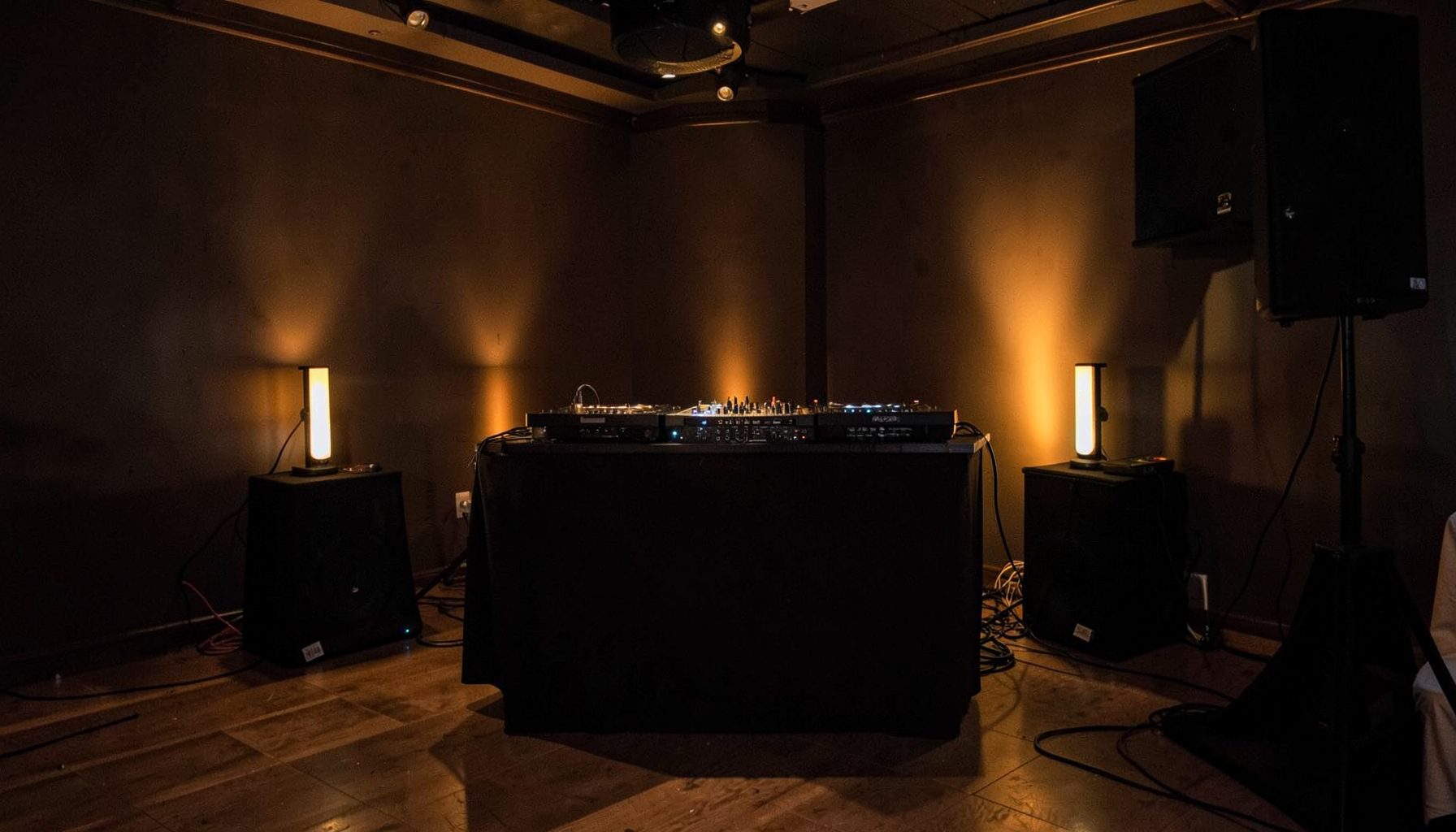
A narrow exclusion can matter when your setup causes damage to the premises. For example, an insurer may treat marks, scratches or dents from stands differently from sudden accidental damage. The discussion of speaker stands and floor damage illustrates why equipment placement and venue surfaces deserve attention before the first regular performance.
Protect income and manage dependence on one venue
A residency can make your cash flow more predictable, but it can also make your business dependent on one client. If the venue closes for renovations, loses its liquor licence, changes its entertainment budget or cancels the agreement, the effect on your income may be immediate. Standard equipment insurance generally does not replace lost earnings simply because a booking disappears.
Ask about business interruption or loss of income cover and find out which insured events can trigger it. Some policies respond after covered physical damage prevents you from trading, while others offer limited extensions. Cancellation cover, personal accident insurance and sickness protection may be relevant if your ability to perform depends entirely on you. These products have different terms, waiting periods and exclusions, so compare the wording rather than relying on the label.
Review the financial side of the agreement as well. Confirm payment dates, cancellation notice, minimum guaranteed fees, unpaid breaks and responsibility for extra performances. Keep invoices and attendance records so that your normal revenue can be demonstrated if an insured interruption occurs. If you operate through an Australian company or sole trader structure, make sure the policy names the correct legal entity and business trading name.
Entertainment markets can also shift because of regulation and consumer behaviour. Changes affecting gaming venues, alcohol service or late-night trading may alter the kind of work available. Coverage should follow the services you provide, while your business planning should avoid assuming that a busy residency will continue indefinitely. A report on pokies reforms in Hervey Bay is a reminder that venue conditions and entertainment demand can change for reasons outside an entertainer’s control.
Update vehicles, workers and compliance arrangements
Regular load-ins often increase vehicle use. If you carry speakers, lighting and cases to a venue several times a week, check that your motor policy permits business use and covers the value of permanently carried equipment. A personal-use policy may not be adequate for transporting goods for paid work. Tell the insurer who drives the vehicle, where it is parked overnight and whether equipment remains inside it.
If you hire a sound technician, stagehand, DJ or casual assistant, determine whether they are an employee, contractor or separate business. In Australia, workers compensation obligations are state and territory based, and calling someone a contractor does not settle the issue by itself. Work health and safety duties can also apply to lifting, cabling, electrical equipment, access routes and working around patrons. Obtain certificates of currency from genuine subcontractors, but do not assume their policy removes your own responsibility.
Other compliance issues may affect the residency. Music licensing arrangements may involve APRA AMCOS or another relevant rights organisation, while venues often manage their own licences and operating permissions. Responsible Service of Alcohol rules apply to staff serving alcohol, and your role should be clear if you are asked to encourage sales, supervise patrons or manage a late-night crowd. Those duties may fall outside a straightforward entertainer description and should be disclosed.
Set a review date at least annually and whenever the arrangement changes. Recalculate turnover, equipment values, audience numbers and travel distance. Check the excess, territorial limits, legal defence provisions and exclusions for unattended property. Keep an incident log even when nobody makes a claim: a near miss involving a cable, a damaged connector or a complaint about noise can reveal a risk before it becomes expensive.
Contact your insurer or broker before the residency begins, provide the written agreement and request answers in writing. An association such as N.A.M.E. can also help entertainers find educational resources, business support and industry information, while an Australian adviser can explain how the policy interacts with local requirements. Put the updated certificate, asset list and emergency contacts in your booking and venue files so the protection is practical when you need it.
Get in Touch
Contact N.A.M.E. for membership inquiries, insurance questions, or general information.